
Practice Free AZ-400 Exam Online Questions
Which branching strategy should you recommend for the investment planning applications suite?
- A . release isolation
- B . main only
- C . development isolation
- D . feature isolation
D
Explanation:
Scenario: A branching strategy that supports developing new functionality in isolation must be used.
Feature isolation is a special derivation of the development isolation, allowing you to branch one or more feature branches from main, as shown, or from your dev branches.

When you need to work on a particular feature, it might be a good idea to create a feature branch.
Incorrect Answers:
A: Release isolation introduces one or more release branches from main. The strategy allows concurrent release management, multiple and parallel releases, and codebase snapshots at release time.
B: The Main Only strategy can be folder-based or with the main folder converted to a Branch, to enable additional visibility features. You commit your changes to the main branch and optionally indicate development and release milestones with labels.
C: Development isolation: When you need to maintain and protect a stable main branch, you can branch one or more dev branches from main. It enables isolation and concurrent development. Work can be isolated in development branches by feature, organization, or temporary collaboration.
Reference: https://docs.microsoft.com/en-us/azure/devops/repos/tfvc/branching-strategies-with-tfvc?view=azure-devops
Which branching strategy should you recommend for the investment planning applications suite?
- A . release isolation
- B . main only
- C . development isolation
- D . feature isolation
D
Explanation:
Scenario: A branching strategy that supports developing new functionality in isolation must be used.
Feature isolation is a special derivation of the development isolation, allowing you to branch one or more feature branches from main, as shown, or from your dev branches.
When you need to work on a particular feature, it might be a good idea to create a feature branch.
Incorrect Answers:
A: Release isolation introduces one or more release branches from main. The strategy allows concurrent release management, multiple and parallel releases, and codebase snapshots at release time.
B: The Main Only strategy can be folder-based or with the main folder converted to a Branch, to enable additional visibility features. You commit your changes to the main branch and optionally indicate development and release milestones with labels.
C: Development isolation: When you need to maintain and protect a stable main branch, you can branch one or more dev branches from main. It enables isolation and concurrent development. Work can be isolated in development branches by feature, organization, or temporary collaboration.
Reference: https://docs.microsoft.com/en-us/azure/devops/repos/tfvc/branching-strategies-with-tfvc?view=azure-devops
Which branching strategy should you recommend for the investment planning applications suite?
- A . release isolation
- B . main only
- C . development isolation
- D . feature isolation
D
Explanation:
Scenario: A branching strategy that supports developing new functionality in isolation must be used.
Feature isolation is a special derivation of the development isolation, allowing you to branch one or more feature branches from main, as shown, or from your dev branches.
When you need to work on a particular feature, it might be a good idea to create a feature branch.
Incorrect Answers:
A: Release isolation introduces one or more release branches from main. The strategy allows concurrent release management, multiple and parallel releases, and codebase snapshots at release time.
B: The Main Only strategy can be folder-based or with the main folder converted to a Branch, to enable additional visibility features. You commit your changes to the main branch and optionally indicate development and release milestones with labels.
C: Development isolation: When you need to maintain and protect a stable main branch, you can branch one or more dev branches from main. It enables isolation and concurrent development. Work can be isolated in development branches by feature, organization, or temporary collaboration.
Reference: https://docs.microsoft.com/en-us/azure/devops/repos/tfvc/branching-strategies-with-tfvc?view=azure-devops
Which branching strategy should you recommend for the investment planning applications suite?
- A . release isolation
- B . main only
- C . development isolation
- D . feature isolation
D
Explanation:
Scenario: A branching strategy that supports developing new functionality in isolation must be used.
Feature isolation is a special derivation of the development isolation, allowing you to branch one or more feature branches from main, as shown, or from your dev branches.
When you need to work on a particular feature, it might be a good idea to create a feature branch.
Incorrect Answers:
A: Release isolation introduces one or more release branches from main. The strategy allows concurrent release management, multiple and parallel releases, and codebase snapshots at release time.
B: The Main Only strategy can be folder-based or with the main folder converted to a Branch, to enable additional visibility features. You commit your changes to the main branch and optionally indicate development and release milestones with labels.
C: Development isolation: When you need to maintain and protect a stable main branch, you can branch one or more dev branches from main. It enables isolation and concurrent development. Work can be isolated in development branches by feature, organization, or temporary collaboration.
Reference: https://docs.microsoft.com/en-us/azure/devops/repos/tfvc/branching-strategies-with-tfvc?view=azure-devops
You use GitHub for source control and project-related discussions.
You receive a notification when an entry is made to any team discussion.
You need to ensure that you receive email notifications only for discussions in which you commented or in which you are mentioned.
Which two Notifications settings should you clear? Each correct answer presents part of the solution. NOTE: Each correct selection is worth one point.
- A . Participating
- B . Automatically watch repositories
- C . Automatically watch teams
- D . Watching
You use GitHub for source control and project-related discussions.
You receive a notification when an entry is made to any team discussion.
You need to ensure that you receive email notifications only for discussions in which you commented or in which you are mentioned.
Which two Notifications settings should you clear? Each correct answer presents part of the solution. NOTE: Each correct selection is worth one point.
- A . Participating
- B . Automatically watch repositories
- C . Automatically watch teams
- D . Watching
SIMULATION
You plan to deploy a template named D:Deploy.json to a resource group named Deploy-lod9940427.
You need to modify the template to meet the following requirements, and then to deploy the template:
The address space must be reduced to support only 256 total IP addresses.
The subnet address space must be reduced to support only 64 total IP addresses.
To complete this task, sign in to the Microsoft Azure portal.
HOTSPOT
You have a Bicep file named Main.bicep.
You run the following command.
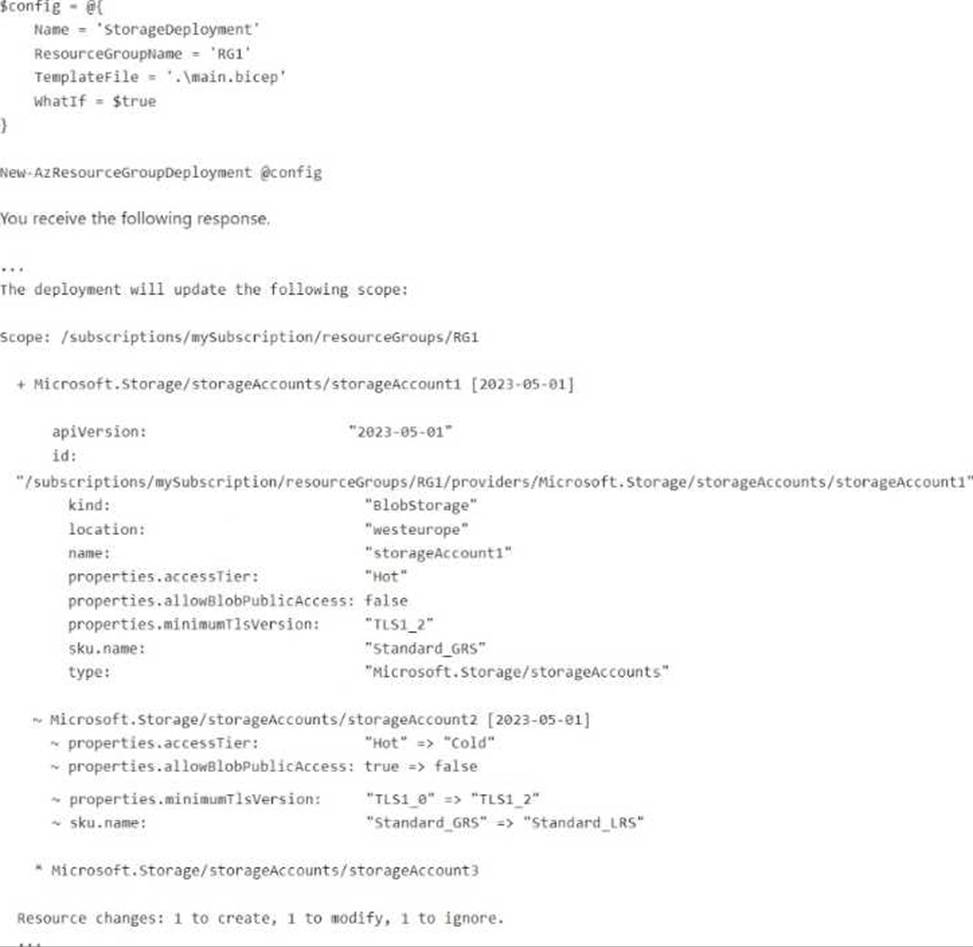
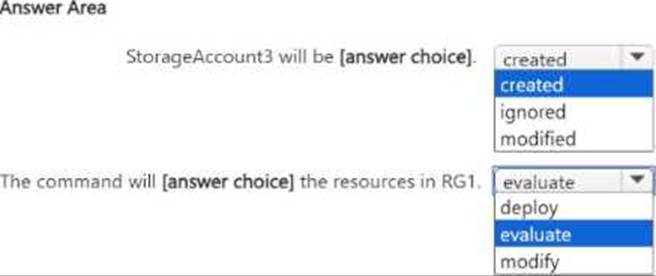
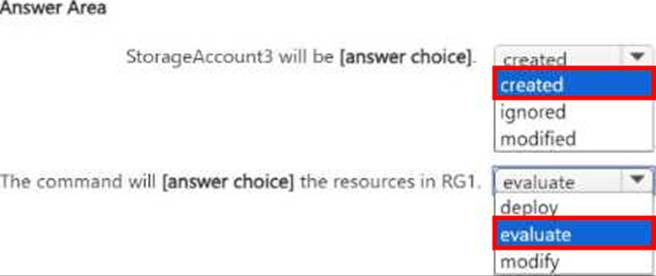
Use the drop-down menus to select the answer choice that completes each statement based on the information presented. NOTE: Each correct selection is worth one point.
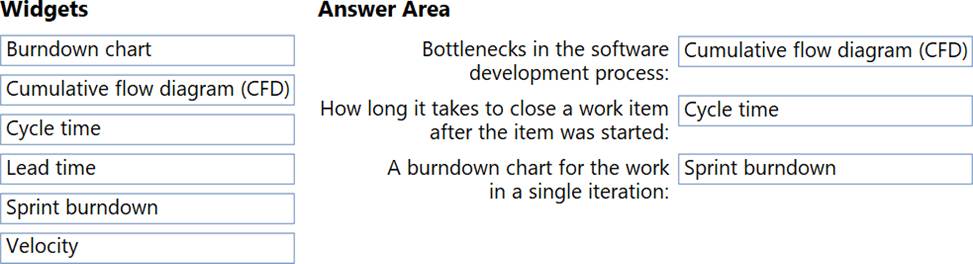
DRAG DROP
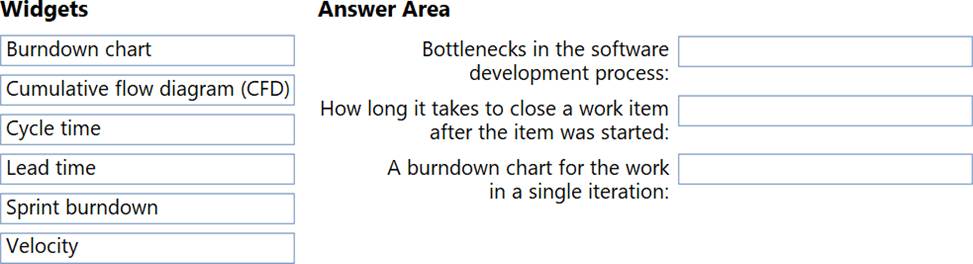
You have a project in Azure DevOps.
You need to configure a dashboard.
The solution must include the following metrics:
• Bottlenecks in the software development process
• A burndown chart for the work in a single iteration
• How long it takes to close a work item after the item was started
Which type of widget should you use for each metric? To answer, drag the appropriate widget types to the correct metrics. Each widget type may be used once, more than once, or not at all. You may need to drag the split bar between panes or scroll to view content. NOTE: Each correct selection is worth one point.
DRAG DROP
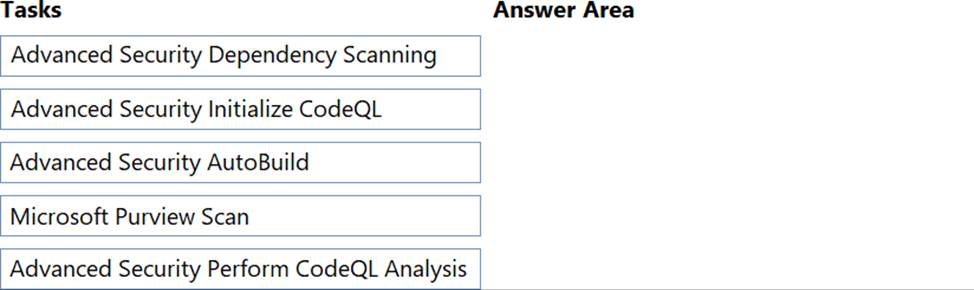
You have an Azure Repos repository named Repo1 that is used for source control.
You need to configure code scanning for Repo1.
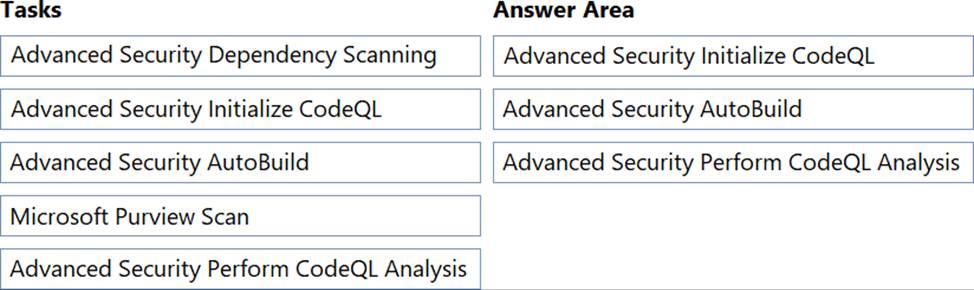
Which three tasks should the pipeline perform in sequence? To answer, move the appropriate tasks from the list of tasks to the answer area and arrange them in the correct order
Explanation:
Advanced Security Intialize CodeQL
Advanced Security AutoBuild
Advanced Security Perform CodeQL Analysis