
Practice Free N10-009 Exam Online Questions
Which of the following is a use case for a PaaS environment?
- A . Mobile access
- B . E-commerce site
- C . Application development
- D . Cloud-native software
C
Explanation:
PaaS (Platform as a Service) is best suited for application development because it provides a managed platform that includes the runtime environment, development frameworks, middleware, databases (often), and build/deployment tooling. In a PaaS model, the cloud provider manages the underlying infrastructure (servers, storage, networking, OS patching, and often the application runtime), allowing developers to focus on writing code, testing, and releasing applications quickly. This aligns with Network+ cloud concepts where service models are compared by responsibility: PaaS reduces operational overhead for the customer and accelerates development through standardized environments and automation.
Mobile access is a use case for remote access solutions (VPN, zero trust access, MDM), not specifically PaaS. An e-commerce site could be hosted using many models (IaaS, PaaS, SaaS), so it’s not the most specific match. Cloud-native software describes an architectural style (microservices, containers, managed services) and can be built using PaaS components, but it is broader than a single “use case” and is not as directly tied to the PaaS definition as application development is. Therefore, application development is the clearest and most accurate PaaS use case.
Which of the following protocol ports should be used to securely transfer a file?
- A . 22
- B . 69
- C . 80
- D . 3389
A
Explanation:
Port 22 is used for SFTP (Secure File Transfer Protocol) and SCP (Secure Copy Protocol), which encrypt file transfers using SSH (Secure Shell). This ensures data is transmitted securely over the network.
• Why not the other options?
• Port 69 (B) C TFTP (Trivial File Transfer Protocol): Transfers files but is not secure (no encryption).
• Port 80 (C) C HTTP: Used for web traffic, not for file transfer.
• Port 3389 (D) C RDP (Remote Desktop Protocol): Used for remote desktop access, not file transfer.
Reference: CompTIA Network+ (N10-009) Official Guide C Chapter 5: Network Protocols and Ports
Which of the following protocol ports should be used to securely transfer a file?
- A . 22
- B . 69
- C . 80
- D . 3389
A
Explanation:
Port 22 is used for SFTP (Secure File Transfer Protocol) and SCP (Secure Copy Protocol), which encrypt file transfers using SSH (Secure Shell). This ensures data is transmitted securely over the network.
• Why not the other options?
• Port 69 (B) C TFTP (Trivial File Transfer Protocol): Transfers files but is not secure (no encryption).
• Port 80 (C) C HTTP: Used for web traffic, not for file transfer.
• Port 3389 (D) C RDP (Remote Desktop Protocol): Used for remote desktop access, not file transfer.
Reference: CompTIA Network+ (N10-009) Official Guide C Chapter 5: Network Protocols and Ports
A network administrator needs to connect two routers in a point-to-point configuration and conserve IP space.
Which of the following subnets should the administrator use?
- A . 724
- B . /26
- C . /28
- D . /30
D
Explanation:
Using a /30 subnet mask is the most efficient way to conserve IP space for a point-to-point
connection between two routers. A /30 subnet provides four IP addresses, two of which can be assigned to the router interfaces, one for the network address, and one for the broadcast address. This makes it ideal for point-to-point links where only two usable IP addresses are needed.
Reference: CompTIA Network+ study materials and subnetting principles.
SIMULATION
A network technician needs to resolve some issues with a customer’s SOHO network. The customer reports that some of the PCs are not connecting to the network, while others appear to be working as intended.
INSTRUCTIONS
Troubleshoot all the network components.
Review the cable test results first, then diagnose by clicking on the appropriate PC,
server, and Layer 2 switch.
Identify any components with a problem and recommend a solution to correct each problem.
If at any time you would like to bring back the initial state of the simulation, please click the Reset All button.
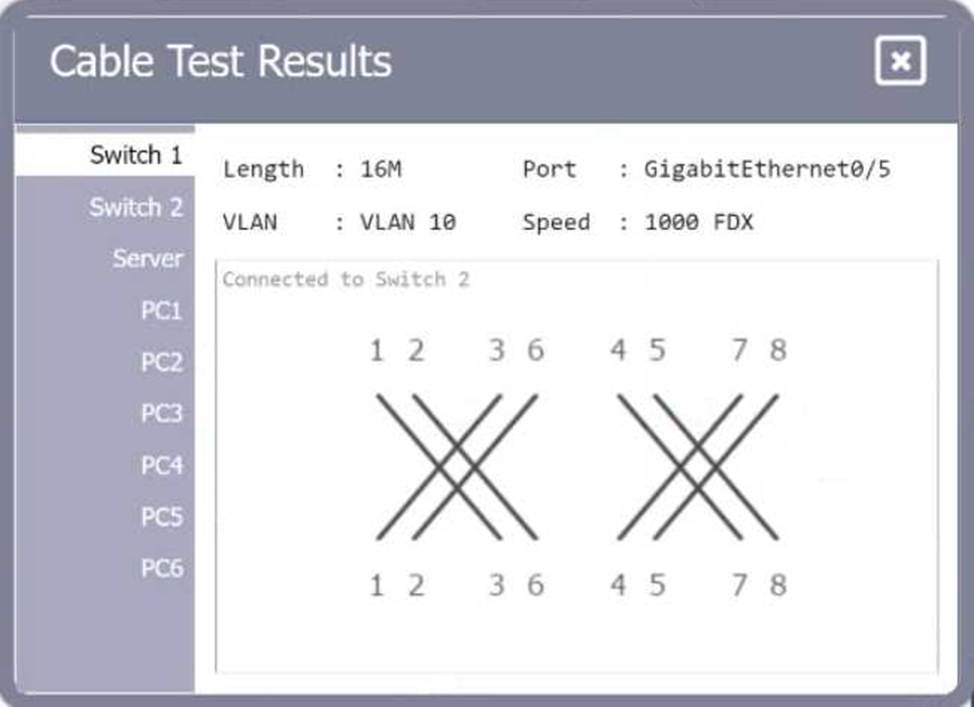
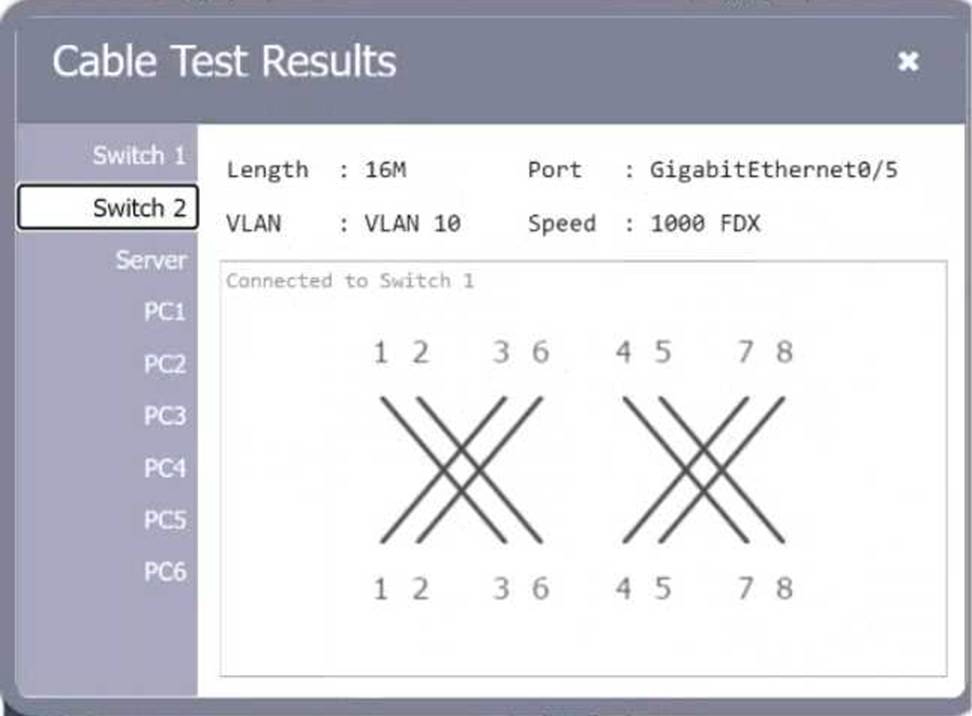
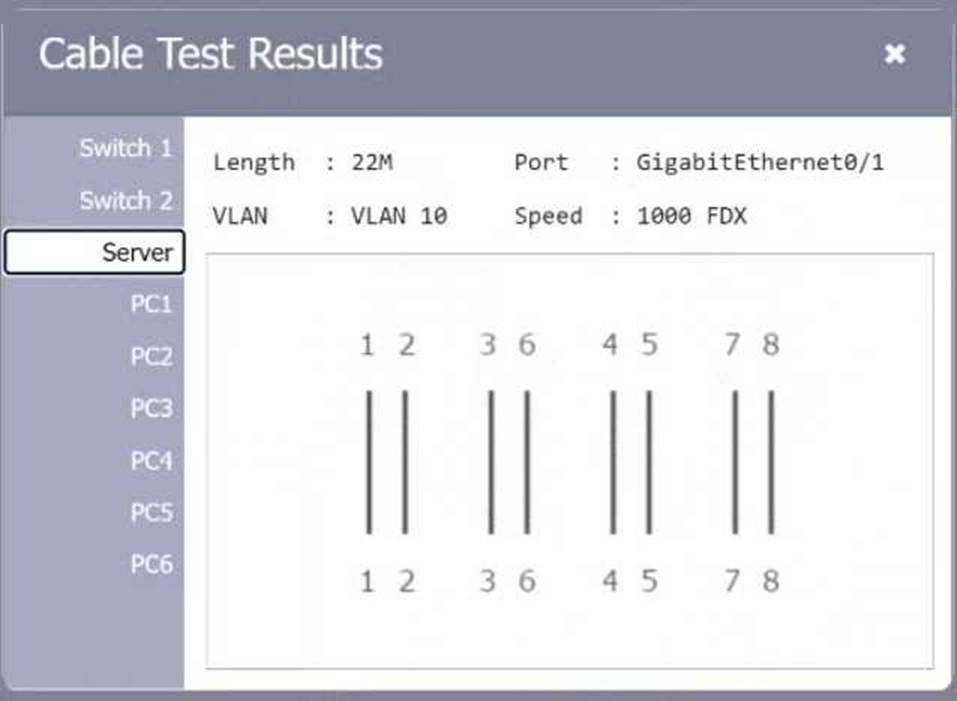
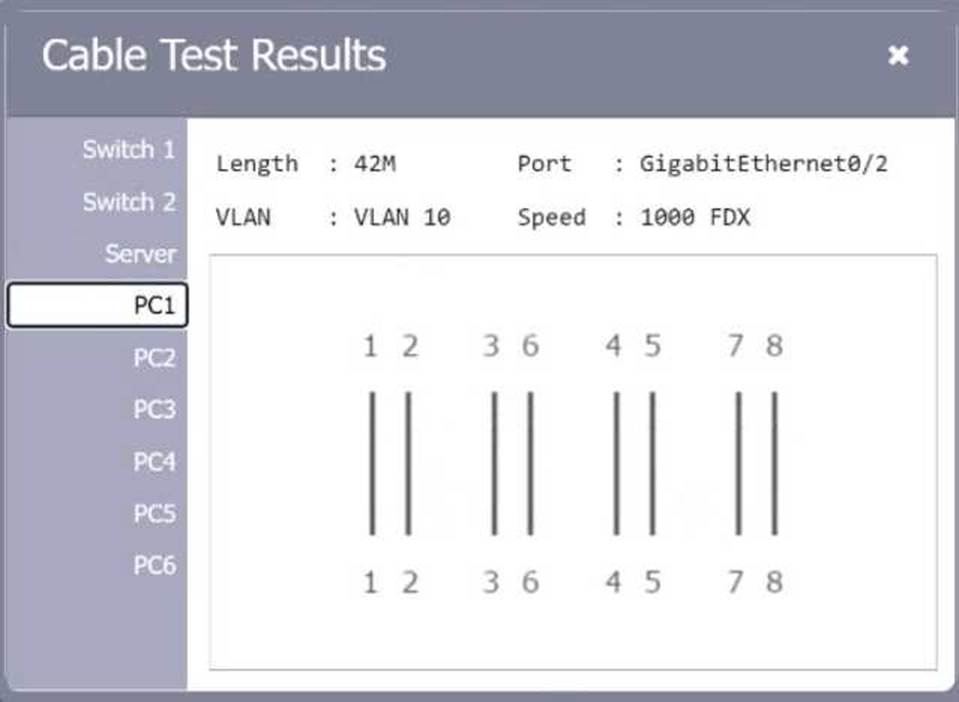
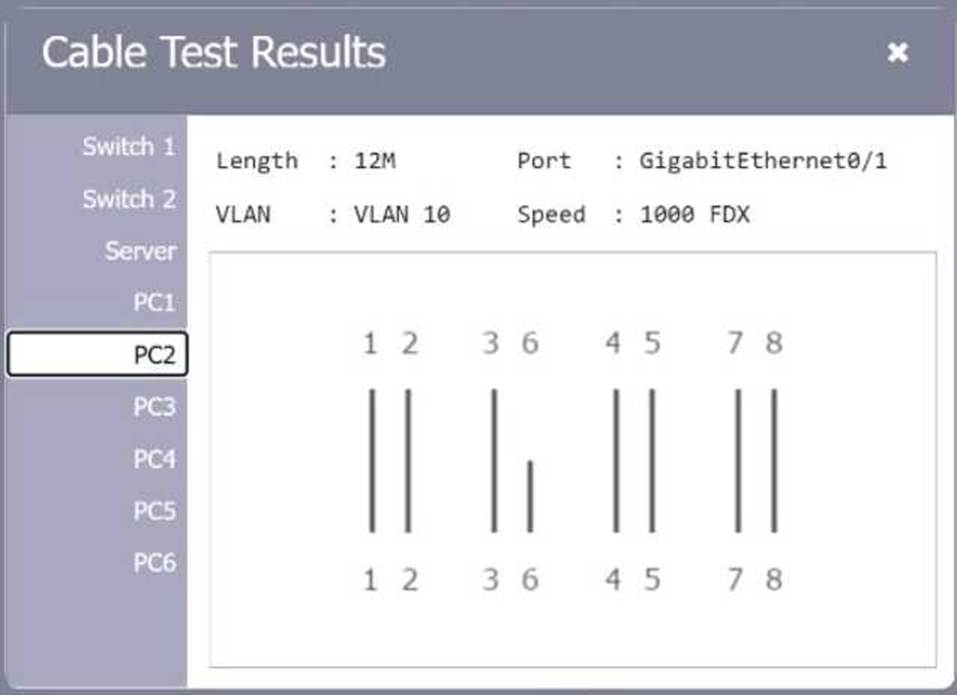
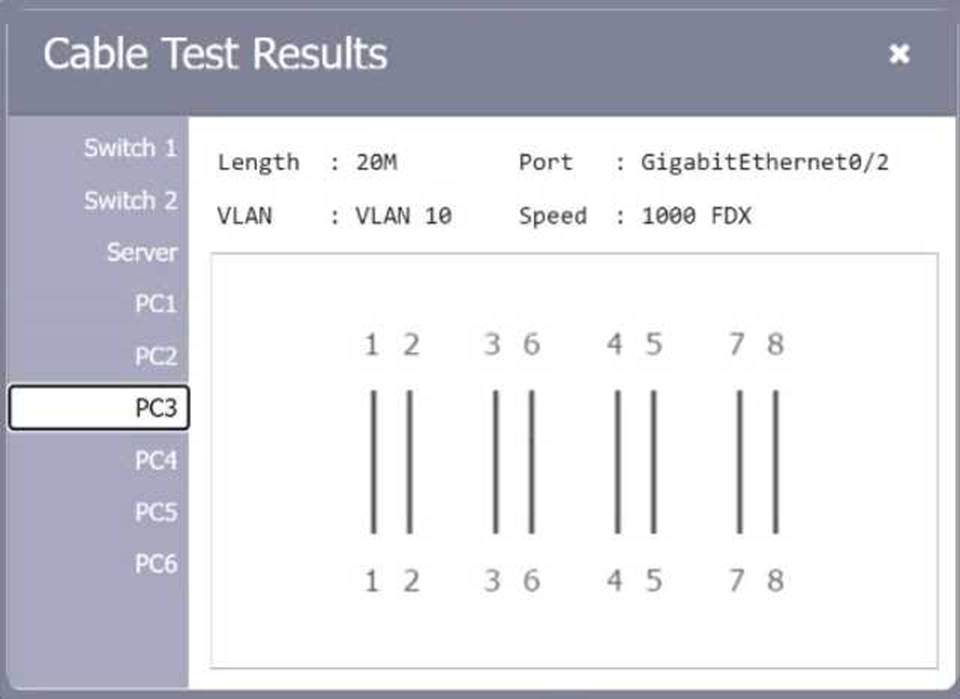
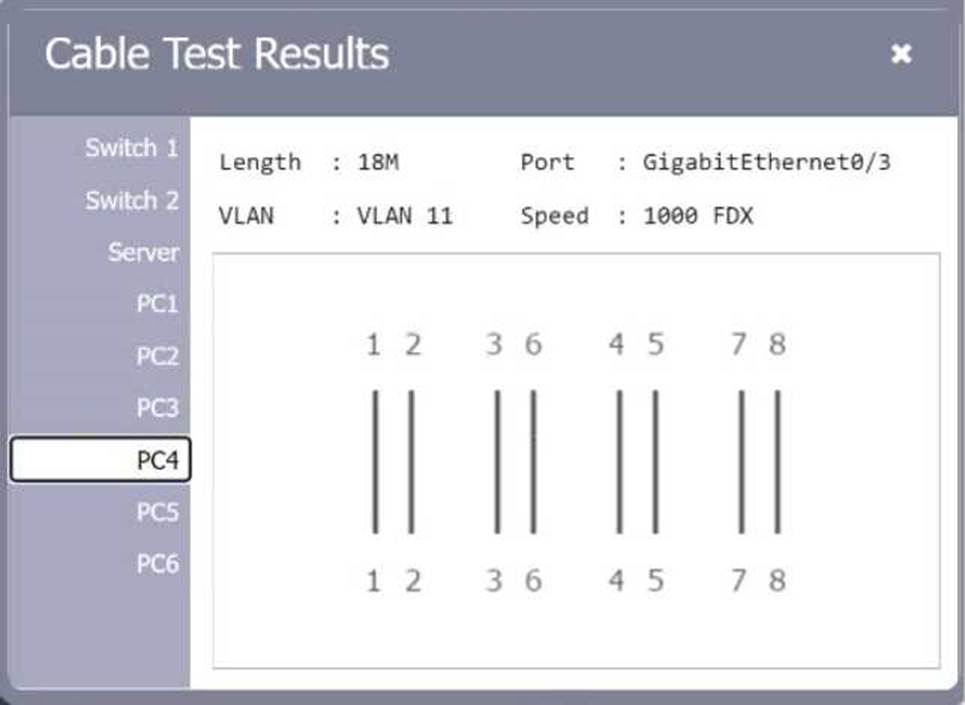
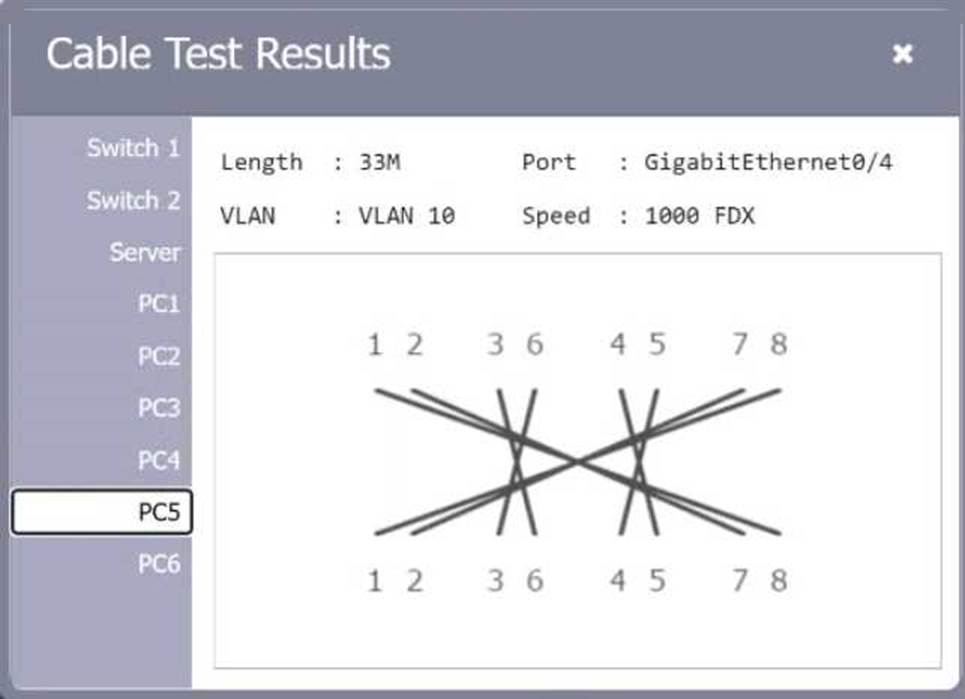
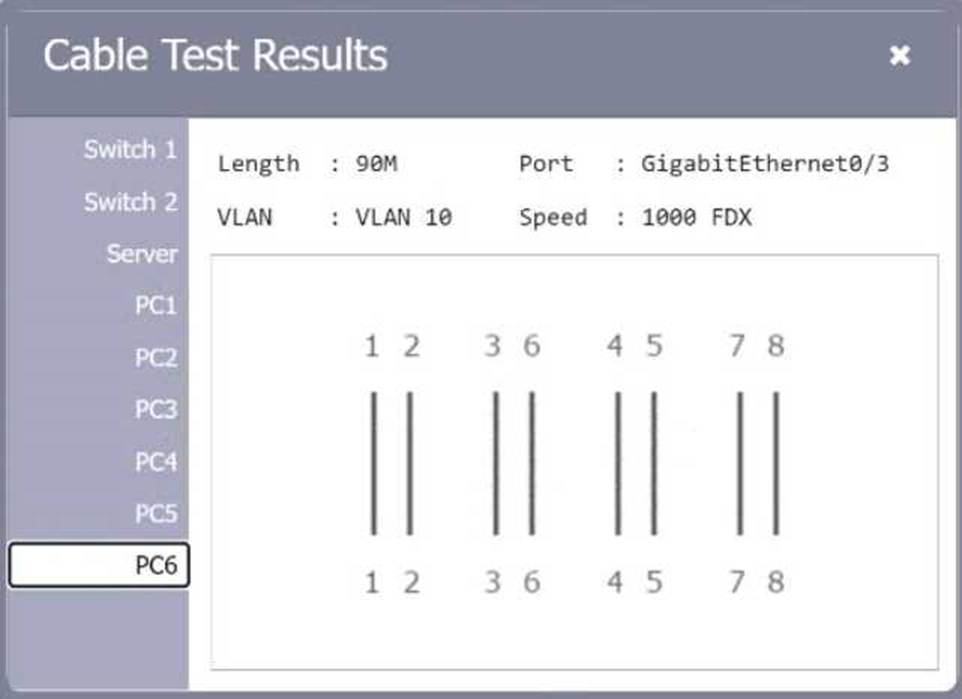
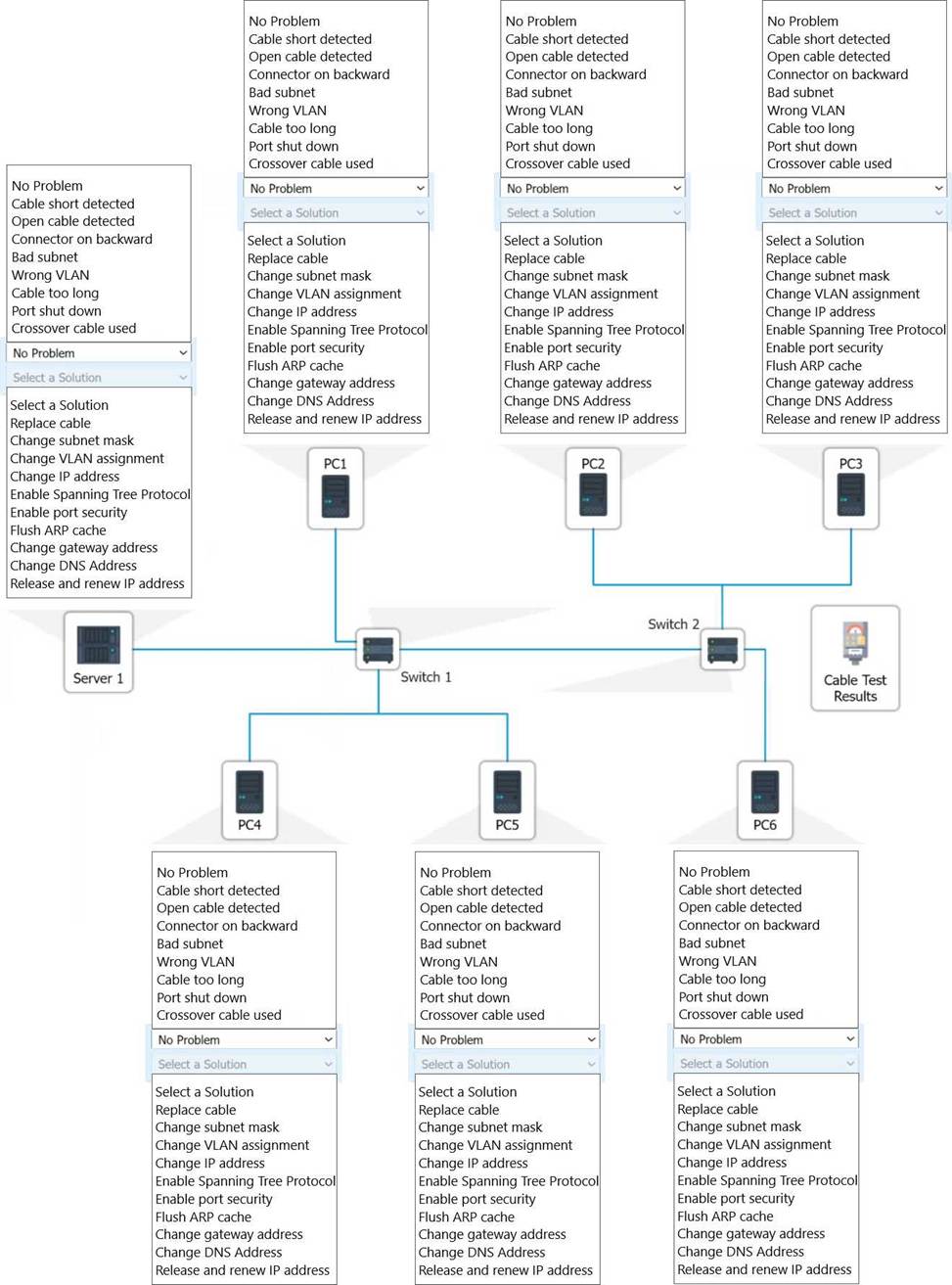
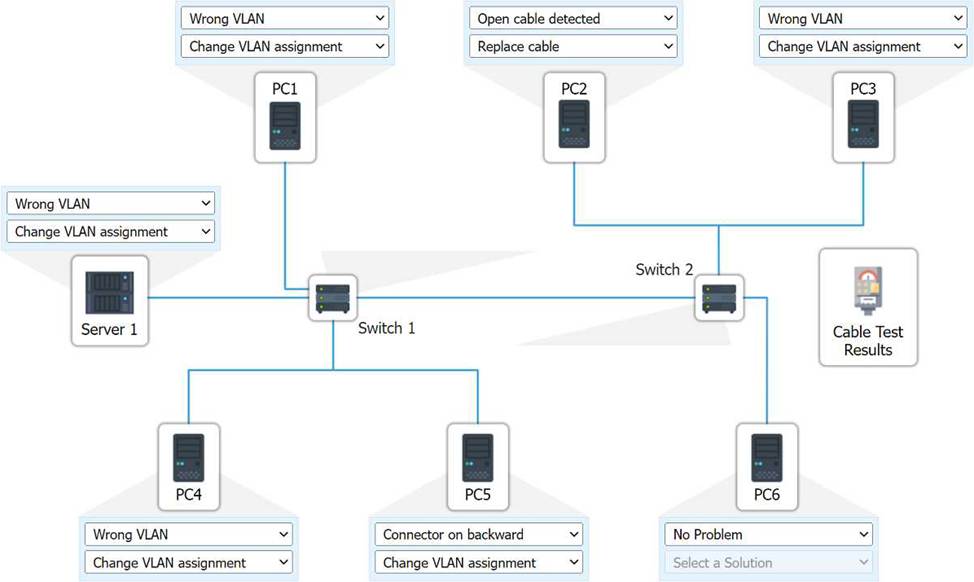
A computer network diagram with many boxes and text AI-generated content may be incorrect.
A network technician sets up a computer on the accounting department floor for a user from the marketing department. The user reports that they cannot access the marketing department’s shared drives but can access the internet.
Which of the following is the most likely cause of this issue?
- A . Mismatched switchport duplex
- B . Misconfigured gateway settings
- C . Incorrect VLAN assignment
- D . SVI is assigned to the wrong IP address
C
Explanation:
The user’s inability to access the marketing department’s shared drives, despite having internet access, suggests a network segmentation issue. The most likely cause is an incorrect VLAN assignment. The computer is physically located on the accounting department floor, and the switchport is likely configured for the accounting VLAN, not the marketing VLAN. VLANs segment network traffic, and if the computer is in the wrong VLAN, it cannot communicate with the marketing department’s resources.
Why not Mismatched switchport duplex? Duplex mismatches cause performance issues (e.g., packet loss) but not specific access denials to shared drives.
Why not Misconfigured gateway settings? Incorrect gateway settings would prevent internet access, which the user has.
Why not SVI is assigned to the wrong IP address? A Switch Virtual Interface (SVI) with an incorrect IP address affects inter-VLAN routing, but this would likely impact multiple users, not just one.
Reference: CompTIA Network+ N10-009 Objective 2.2: Explain the purpose of network segmentation and VLAN configuration. The CompTIA Network+ Study Guide (e.g., Chapter 6: Switching) explains that VLANs isolate traffic, and incorrect VLAN assignments prevent access to resources on other VLANs.
Two companies successfully merged. Following the merger, a network administrator identified a connection bottleneck. The newly formed company plans to acquire a high-end 40GB switch and redesign the network from a three-tier model to a collapsed core.
Which of the following should the administrator do until the new devices are acquired?
- A . Implement the FHRP.
- B . Configure a route selection metric change.
- C . Install a load balancer.
- D . Enable link aggregation.
D
Explanation:
• The issue described is a network bottleneck due to increased traffic after a merger.
• A collapsed core architecture consolidates the core and distribution layers into a single layer to improve efficiency and reduce latency.
• Until the 40GB switch is acquired, Link Aggregation (LAG) (IEEE 802.3ad / LACP) can be used to combine multiple physical links into a single logical link, increasing bandwidth and reducing bottlenecks.
• FHRP (First Hop Redundancy Protocol) (A) is used for gateway redundancy, not link aggregation.
• Route selection metric changes (B) help with routing decisions but don’t address physical link congestion.
• Load balancers (C) distribute traffic for applications, not network links.
Reference: CompTIA Network+ N10-009 Official Documentation C Network Architecture and Performance Optimization.
Which of the following is the MOST appropriate solution to extend the network to a building located across the street from the main facility?
- A . Multimode fiber
- B . 802.11ac wireless bridge
- C . Cat 6 copper
- D . Loopback adapter
B
Explanation:
An 802.11ac wireless bridge is the most practical solution to connect two nearby buildings without trenching or laying physical cable. It provides high-speed, point-to-point connectivity using directional antennas.
After a security incident, a technician reveals that company data was stolen. During the investigation, it is discovered that a host disguised itself as a switch.
Which of the following best describes the attack that occurred?
- A . VLAN hopping
- B . Evil twin
- C . DNS poisoning
- D . ARP spoofing
A
Explanation:
VLAN hopping occurs when an attacker tricks a switch into believing the host is another switch by generating tagged frames or exploiting trunk negotiation (DTP). This allows the attacker to access traffic from multiple VLANs, potentially stealing sensitive data.
B. Evil twin is a rogue wireless AP attack, unrelated to switch impersonation.
C. DNS poisoning corrupts name resolution, not VLAN access.
D. ARP spoofing is a Layer 2 on-path attack, not masquerading as a switch.
Reference (CompTIA Network+ N10-009):
Domain: Network Security ― VLAN hopping attacks, switch spoofing techniques.
Which of the following is used most often when implementing a secure VPN?
- A . IPSec
- B . GRE
- C . BGP
- D . SSH
A
Explanation:
The most common protocol for secure VPNs is IPsec (Internet Protocol Security). IPsec provides confidentiality, integrity, and authentication for VPN traffic, typically using ESP (Encapsulating Security Payload). It is used in both site-to-site and remote access VPNs.
B. GRE encapsulates traffic but does not provide encryption.
C. BGP is a routing protocol, not a VPN technology.
D. SSH can be used for secure tunneling but is not the standard for VPN deployment.
IPsec is the industry standard because it operates at Layer 3, securing IP traffic regardless of the application, making it highly versatile.
Reference (CompTIA Network+ N10-009):
Domain: Network Security ― VPN protocols, IPsec, ESP.