
Practice Free AZ-120 Exam Online Questions
You have an Azure subscription that contains a Windows-based SAP deployment. You plan to register the SAP deployment with Azure Center for SAP solutions. You need to verify that SAP system-level prerequisites are met.
Which command should you run?
- A . sapacext
- B . hostexecstart
- C . saposco1
- D . saphostexec
DRAG DROP
You plan to deploy an SAP production landscape on Azure. The landscape will use SAP HANA databases that run on Azure virtual machines.
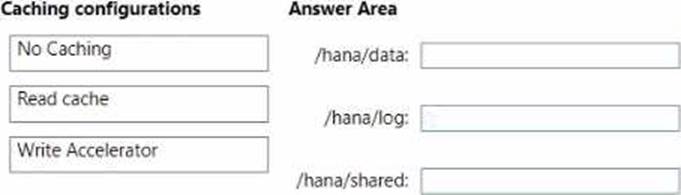
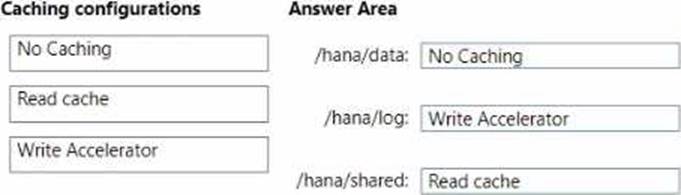
Each HANA virtual machine will contain the following three premium data disks:
• Shared
• Data
• Log
You need to configure caching on the data disks.
The solution must meet the following requirements:
• Maximize data throughput.
• Minimize potential data loss.
Which caching configuration should you use for each disk? To answer, drag the appropriate caching configurations to the correct disks. Each caching configuration may be used once, more than once, or not at all. You may need to drag the split bar between panes or scroll to view content. NOTE: Each correct selection is worth one point.
You have an SAP production landscape in Azure. The landscape is hosted on 50 virtual machines that run SUSE Enterprise Linux (SLES). The virtual machines are billed by using pay-as-you-go rates.
You need to minimize operating system costs for the virtual machines.
What should you use?
- A . spot pricing
- B . capacity reservations
- C . Azure Hybrid Benefit
- D . reserved instances
HOTSPOT
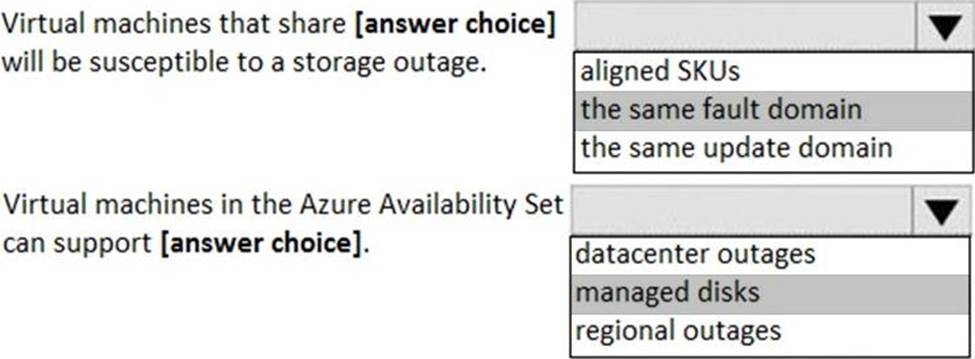
You have an Azure Availability Set that is configured as shown in the following exhibit.
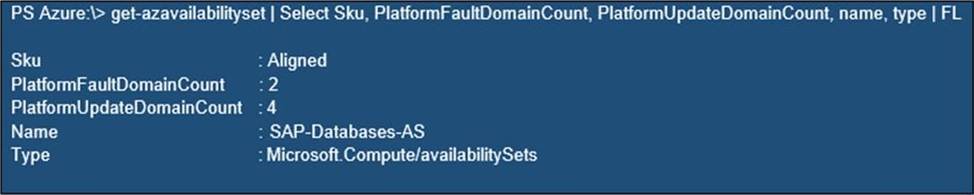
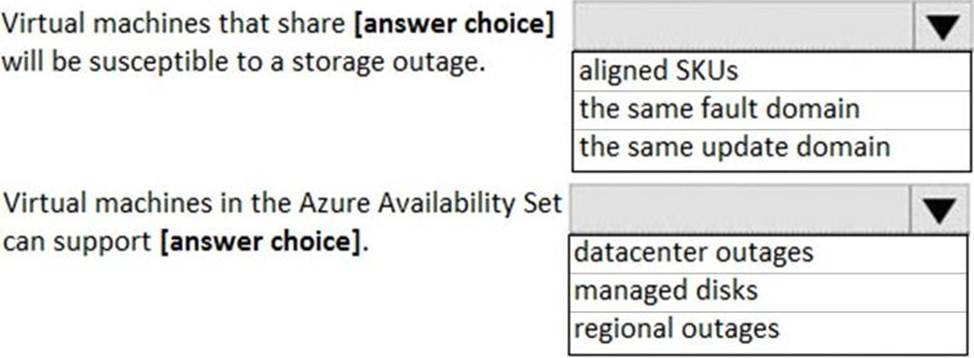
Use the drop-down menus to select the answer choice that completes each statement based on the information presented in the graphic. NOTE: Each correct selection is worth one point.
Explanation:
Box 1: the same fault domain
Fault domains define the group of virtual machines that share a common power source and network switch. If a storage fault domain fails due to hardware or software failure, only the VM instance with disks on the storage fault domain fails.
Box 2: managed disks
Managed disks provide better reliability for Availability Sets by ensuring that the disks of VMs in an Availability Set are sufficiently isolated from each other to avoid single points of failure. It does this by automatically placing the disks in different storage fault domains (storage clusters) and aligning them with the VM fault domain.
Reference: https://docs.microsoft.com/en-us/azure/virtual-machines/windows/manage-availability
You migrate an SAP environment to Azure.
You need to inspect all the outbound traffic from the SAP application servers to the Internet.
Which two Azure resources should you use? Each correct answer presents part of the solution. Network Performance Monitor
- A . Azure Firewall
- B . Azure Traffic Manager
- C . Azure Load Balancer NAT rules
- D . Azure user-defined routes
- E . a web application firewall (WAF) for Azure Application Gateway
You plan to deploy an SAP environment on Azure.
You plan to store all SAP connection strings securely in Azure Key Vault without storing credentials on the Azure virtual machines that host SAP.
What should you configure to allow the virtual machines to access the key vault?
- A . Azure Active Directory (Azure AD) Privilege Identity Manager (PIM)
- B . role-based access control (RBAC)
- C . a Managed Service Identity (MSI)
- D . the Custom Script Extension
C
Explanation:
To reference a credential stored in Azure Key Vault, you need to:
HOTSPOT
You have an Azure subscription.
You are planning the deployment of an SAP production landscape in Azure.
The deployment must meet the following requirements:
• Use Microsoft SQL Server 2022 Enterprise Edition.
• Support Always On availability groups.
• Provide 50,000 IOPS.
• Minimize complexity
• Minimize costs.
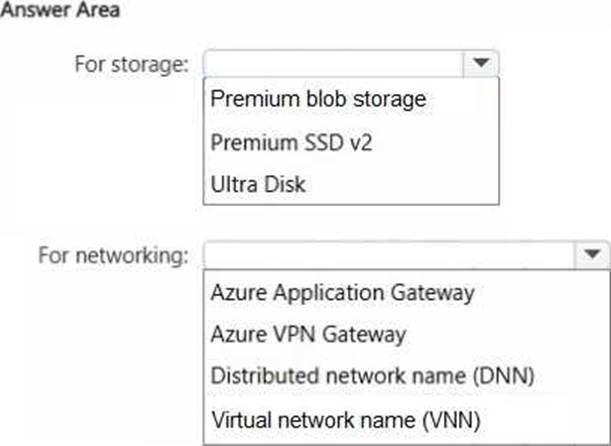
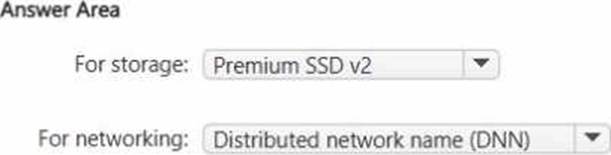
You need to recommend a storage and networking solution for the deployment.
What should you include in the recommendation? To answer, select the appropriate options in the answer area. NOTE: Each correct selection is worth one point.
You have an on-premises datacenter.
You have an Azure subscription that contains a virtual network named VNet1.
VNet1 uses forced tunneling to force all outbound traffic to the internet via the datacenter. You deploy an SAP landscape to VNet1. The landscape uses virtual machines that run Red Hat Enterprise Linux (RHEL) and uses the pay-as-you-go rates.
You discover that the virtual machines fail to receive operating system updates.
You need to ensure that the virtual machines receive operating system updates.
What should you do?
- A . Add user-defined routes (UDRs) to the route table.
- B . Deploy Azure Update Manager.
- C . Deploy an Azure firewall.
- D . Configure an Azure DNS Private Resolver.
DRAG DROP
Your on-premises network contains an Active Directory domain.
You have an SAP environment on Azure that runs on SUSE Linux Enterprise Server (SLES) servers.
You configure the SLES servers to use domain controllers as their NTP servers and their DNS servers.
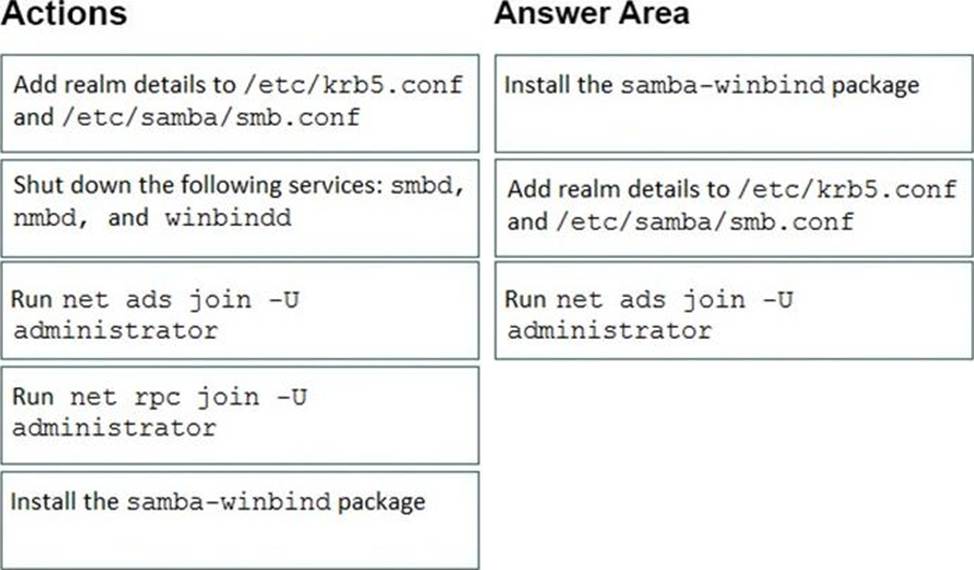
You need to join the SLES servers to the Active Directory domain.
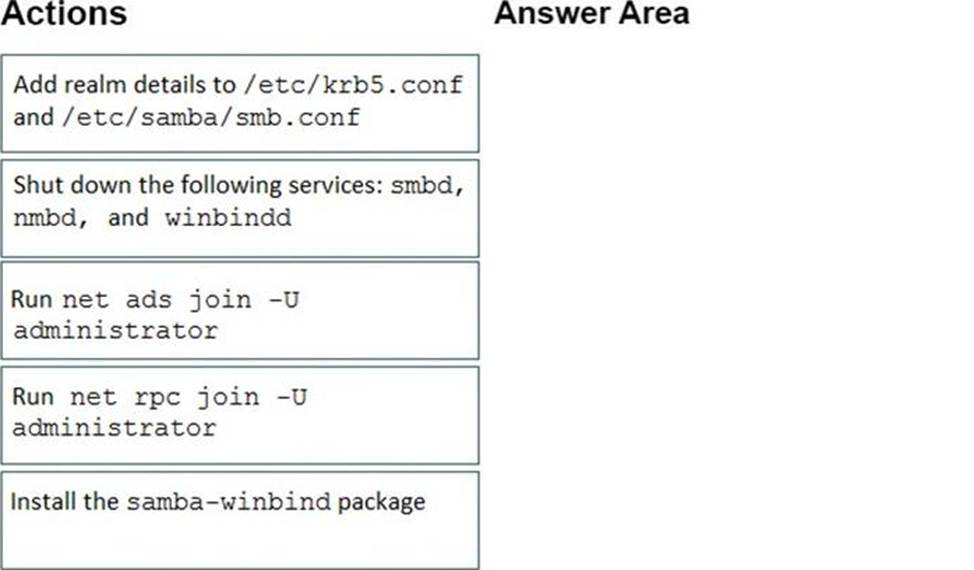
Which three actions should you perform in sequence? To answer, move the appropriate actions from the list of actions to the answer area and arrange them in the correct order.
Explanation:
Step 1: Install the samba-winbind package
Install samba-winbind
Step 2: Add realm details to /etc/krb5.conf and /etc/samba/smb.conf
Edit files – best way to do this is to use yast on test machine and copy files from it
In following examples you need to replace EXAMPLE/EXAMPLE.COM/.example.com with your
values/settings
/etc/samba/smb.conf
[global]
workgroup = EXAMPLE
usershare allow guests = NO #disallow guests from sharing
idmap gid = 10000-20000
idmap uid = 10000-20000
kerberos method = secrets and keytab
realm = EXAMPLE.COM
security = ADS
template homedir = /home/%D/%U
template shell = /bin/bash
winbind offline logon = yes
winbind refresh tickets = yes
/etc/krb5.conf
[libdefaults]
default_realm = EXAMPLE.COM
clockskew = 300
[realms]
EXAMPLE.COM = {
kdc = PDC.EXAMPLE.COM
default_domain = EXAMPLE.COM
admin_server = PDC.EXAMPLE.COM
}
..
Step 3: Run net ads join -U administrator
Join the SLES 12 Server to the AD domain
Reference: https://www.suse.com/support/kb/doc/?id=7018461
You have an SAP on Azure production landscape that is hosted on Standard M-series virtual machines.
You plan to expand the storage on the virtual machines.
Which type of disk can be expanded without causing downtime?
- A . Standard SSD
- B . Premium SSD v2
- C . Premium SSD v1
- D . Ultra