
Practice Free 300-410 Exam Online Questions
Refer to the exhibit.
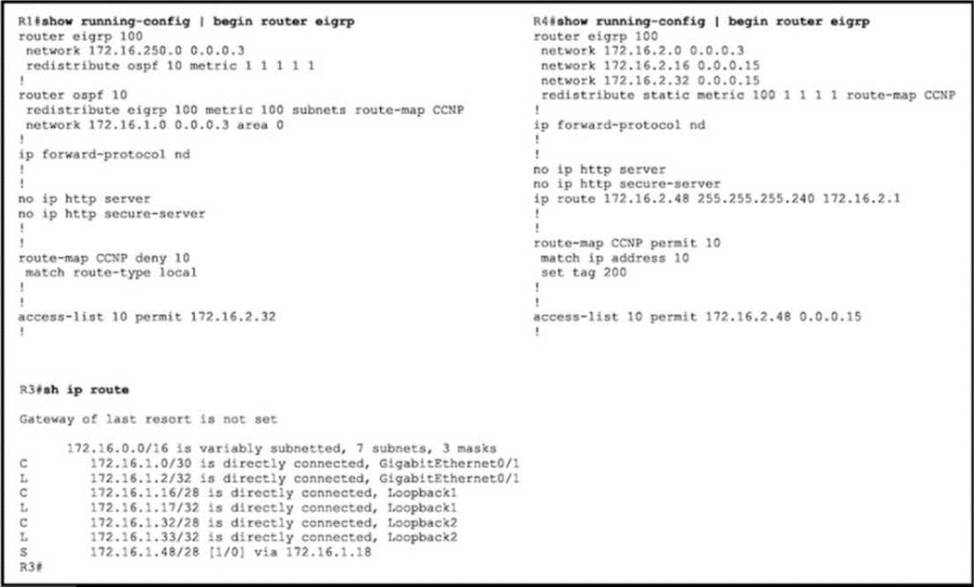
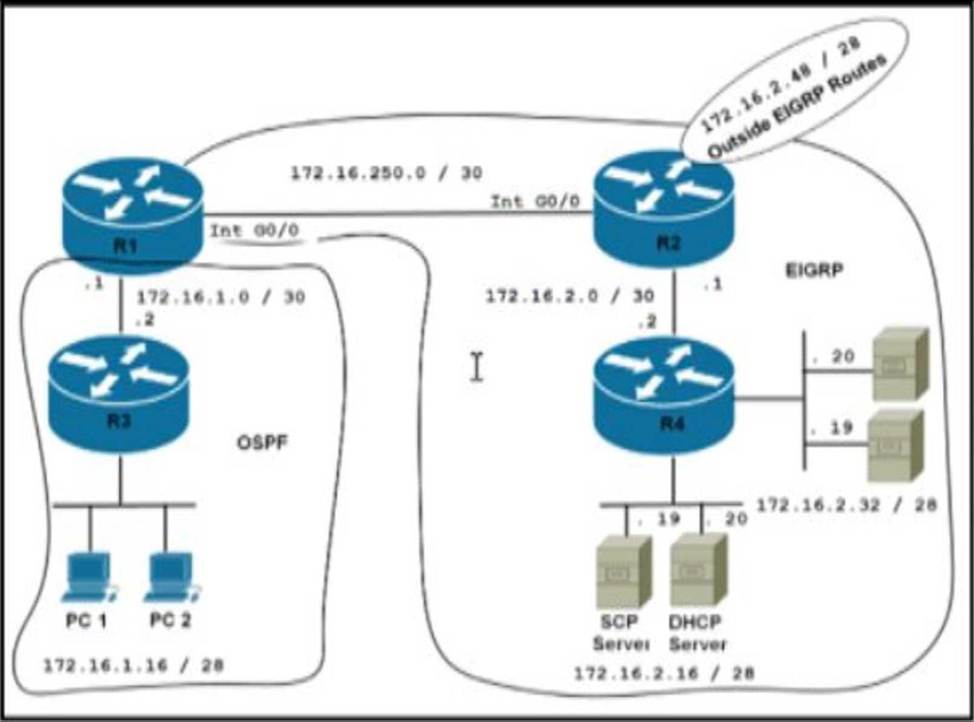
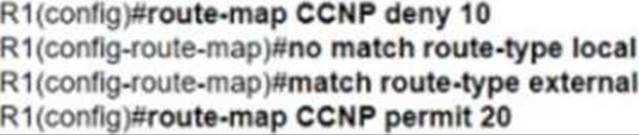
Which configuration resolves the route filtering issue on R1 to redistribute all the routes except 172.16.2.48/28?
A)

B)

C)
D)

- A . Option A
- B . Option B
- C . Option C
- D . Option D
SIMULATION
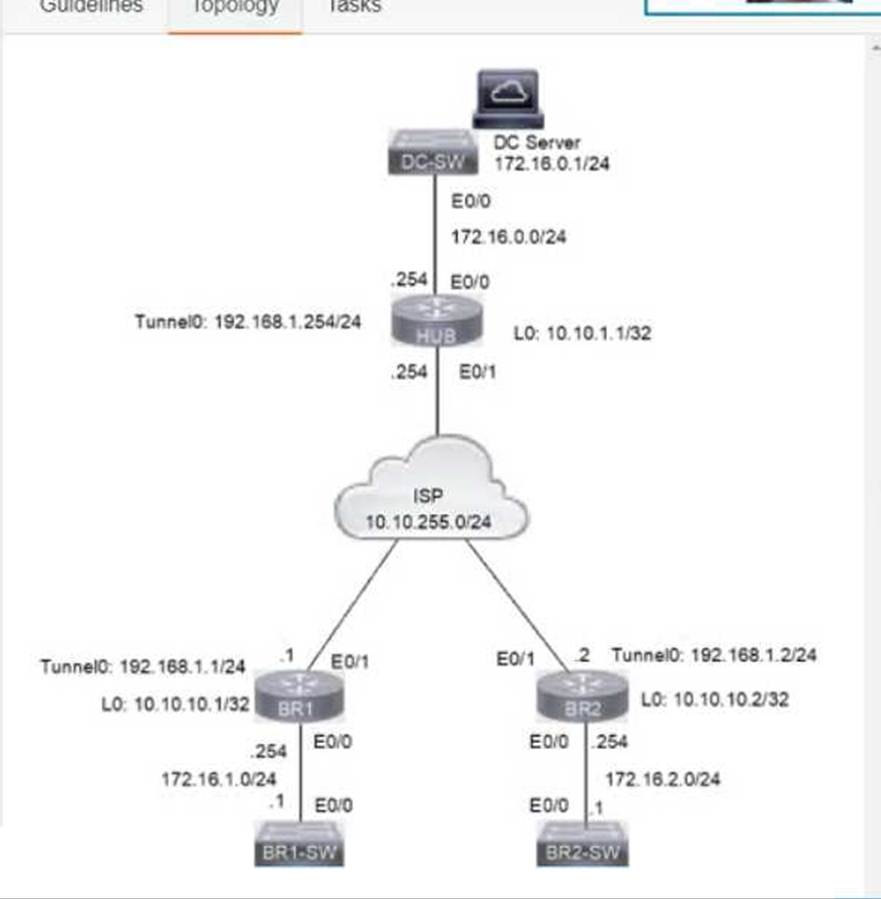
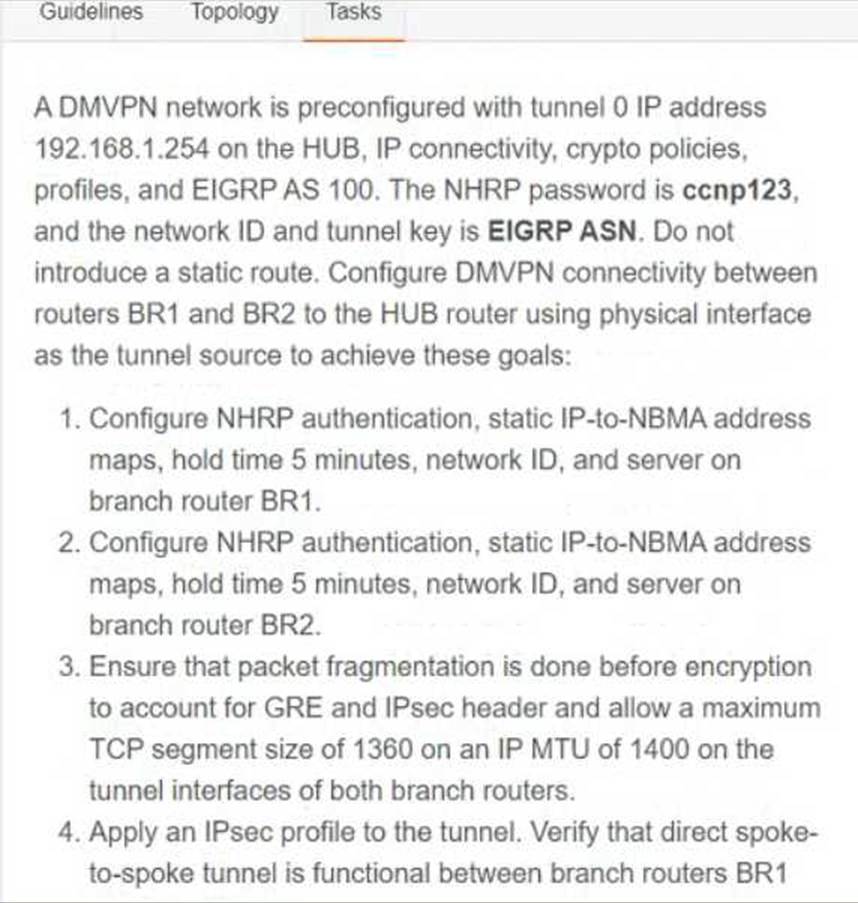
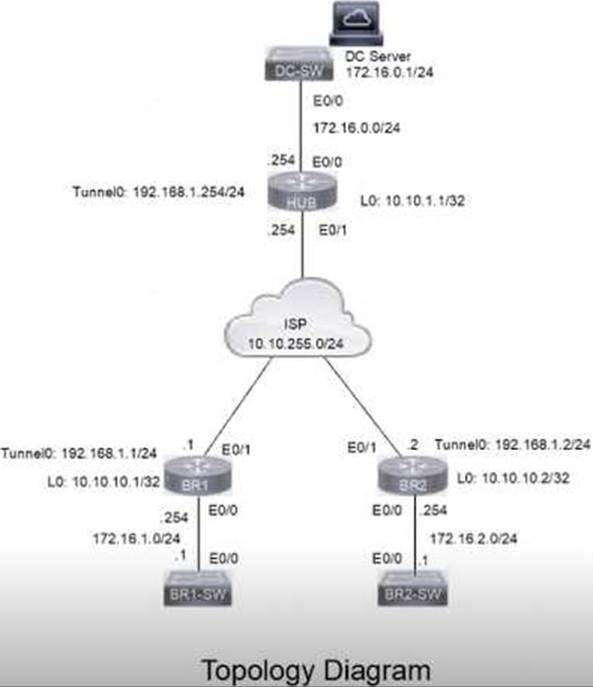
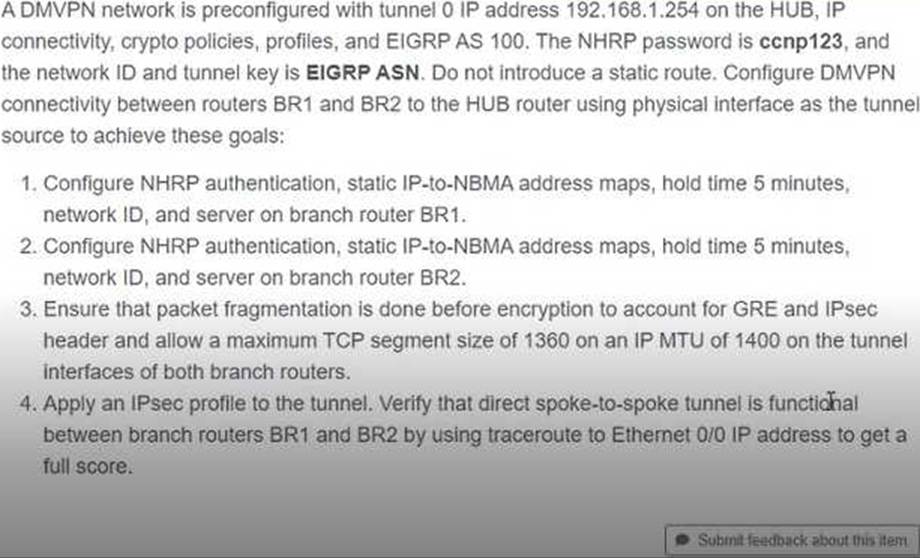
A DMVPN network is preconfigured with tunnel 0 IP address 192.168.1.254 on the HUB, IP connectivity, crypto policies, profiles, and EIGRP AS 100. The NHRP password is ccnp123, and the network ID and tunnel key is EIGRP ASN Do not introduce a static route.
Configure DMVPN connectivity between routers BR1 and BR2 to the HUB router using physical interface as the tunnel source to achieve these goals:
SOLUTION: –
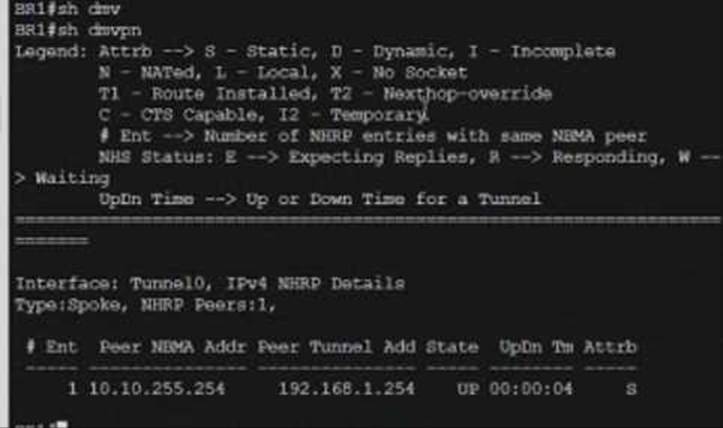
ON BR1
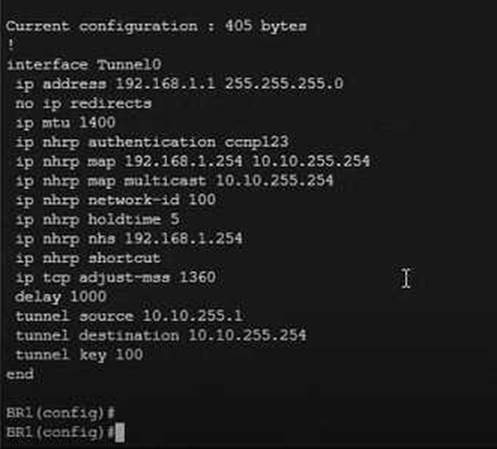
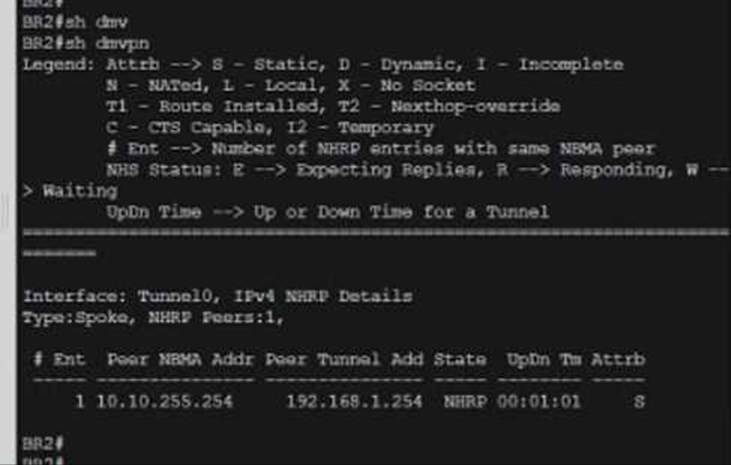
ON BR2
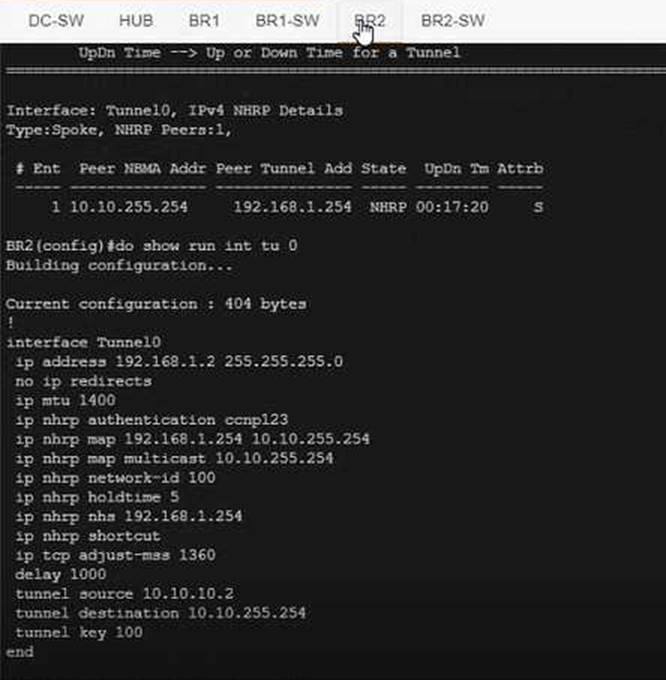
Verification: –
Refer to the exhibit.
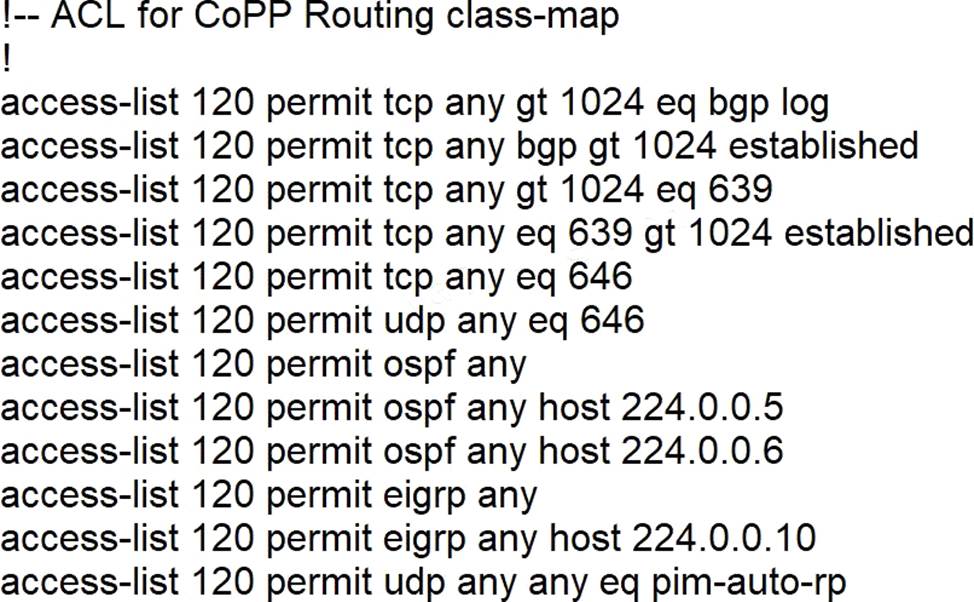
The control plane is heavily impacted after the CoPP configuration is applied to the router.
Which command removal lessens the impact on the control plane?
- A . access-list 120 permit udp any any eq pim-auto-rp
- B . access-list 120 permit eigrp any host 224.0.0.10
- C . access-list 120 permit ospf any
- D . access-list 120 permit tcp any gt 1024 eq bgp log
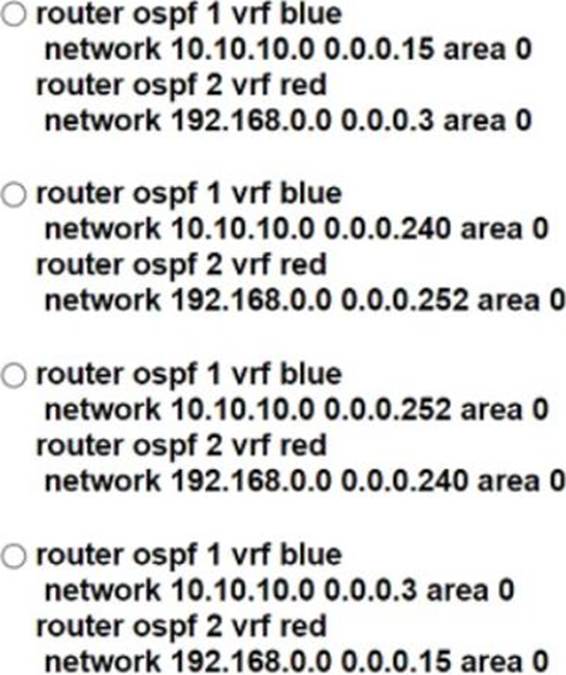
An engineer configured VRF-Lite on a router for VRF blue and VRF red. OSPF must be enabled on each VRF to peer to a directly connected router in each VRF.
Which configuration forms OSPF neighbors over the network 10.10.10.0/28 for VRF blue and 192.168.0.0/30 for VRF red?
- A . Option A
- B . Option B
- C . Option C
- D . Option D
A customer reports that traffic is not passing on an EIGRP enabled multipoint interface on a router configured as below:
interface Serial0/0
no ip address
interface Server0/0/0.9 multipoint
ip address 10.1.1.1 255.255.255.248
ip split-horizon eigrp 1
Which action resolves the issue?
- A . Enable poison reverse
- B . Enable split horizon
- C . Disable poison reverse
- D . Disable split horizon
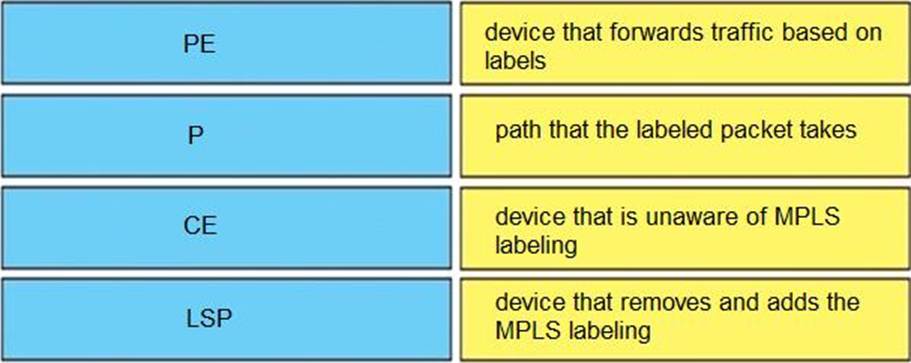
DRAG DROP
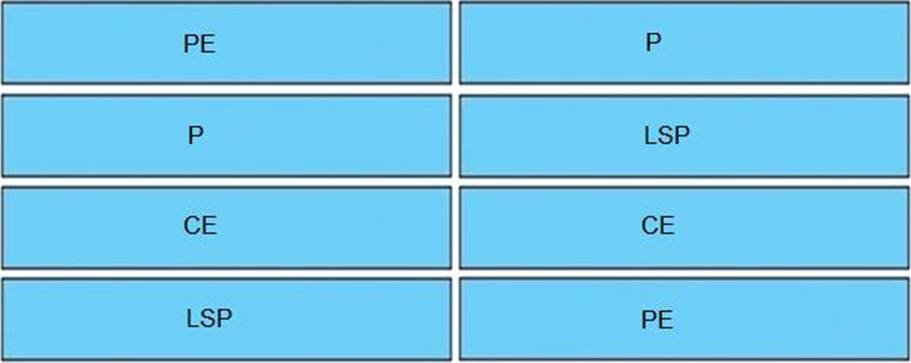
Drag and drop the MPLS terms from the left onto the correct definitions on the right.
Refer to the exhibit.
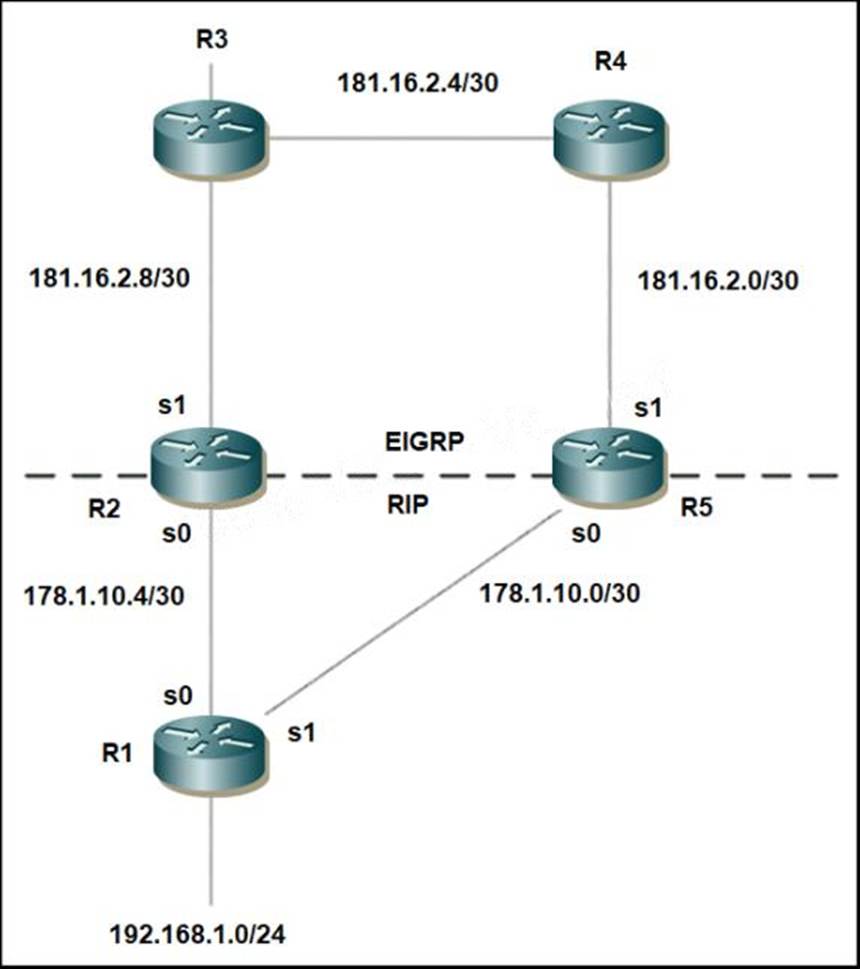
Mutual redistribution is enabled between RIP and EIGRP on R2 and R5.
Which configuration resolves the routing loop for the 192.168.1.0/24 network?
- A . R2:
router eigrp 10
network 181.16.0.0
redistribute rip metric 1 1 1 1 1
distribute-list 1 in s1
!
router rip
network 178.1.0.0
redistribute eigrp 10 metric 2
!
access-list 1 deny 192.168.1.0
access-list 1 permit any
R5:
router eigrp 10
network 181.16.0.0
redistribute rip metric 1 1 1 1 1
distribute-list 1 in s0
!
router rip
network 178.1.0.0
redistribute eigrp 10 metric 2
!
access-list 1 deny 192.168.1.0
access-list 1 permit any - B . R2:
router eigrp 10
network 181.16.0.0
redistribute rip metric 1 1 1 1 1
distribute-list 1 in s0
!
router rip
network 178.1.0.0
redistribute eigrp 10 metric 2
!
access-list 1 deny 192.168.1.0
access-list 1 permit any
R5:
router eigrp 10
network 181.16.0.0
redistribute rip metric 1 1 1 1 1
distribute-list 1 in s0
!
router rip
network 178.1.0.0
redistribute eigrp 10 metric 2
!
access-list 1 deny 192.168.1.0
access-list 1 permit any - C . R2:
router eigrp 10
network 181.16.0.0
redistribute rip metric 1 1 1 1 1
distribute-list 1 in s0
!
router rip
network 178.1.0.0
redistribute eigrp 10 metric 2
!
access-list 1 deny 192.168.1.0
access-list 1 permit any
R5:
router eigrp 10
network 181.16.0.0
redistribute rip metric 1 1 1 1 1
distribute-list 1 in s1
!
router rip
network 178.1.0.0
redistribute eigrp 10 metric 2
!
access-list 1 deny 192.168.1.0
access-list 1 permit any - D . R2:
router eigrp 7
network 181.16.0.0
redistribute rip metric 1 1 1 1 1
distribute-list 1 in s1
!
router rip
network 178.1.0.0
redistribute eigrp 7 metric 2
!
access-list 1 deny 192.168.1.0
access-list 1 permit any
R5:
router eigrp 7
network 181.16.0.0
redistribute rip metric 1 1 1 1 1
distribute-list 1 in s1
!
router rip
network 178.1.0.0
redistribute eigrp 7 metric 2
!
access-list 1 deny 192.168.1.0
access-list 1 permit any
D
Explanation:
https://www.cisco.com/c/en/us/support/docs/ip/enhanced-interior-gateway-routing-protocol-eigrp/8606-redist.html
Refer to the exhibit.
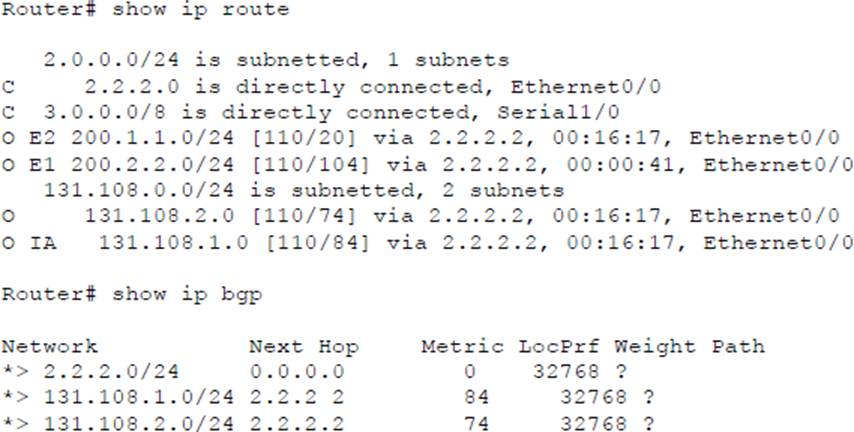
The OSPF routing protocol is redistributed into the BGP routing protocol, but not all the OSPF routes are distributed into BGP.
Which action resolves the issue?
- A . Include the word external in the redistribute command
- B . Use a route-map command to redistribute OSPF external routes defined in an access list
- C . Include the word internal external in the redistribute command
- D . Use a route-map command to redistribute OSPF external routes defined in a prefix list.
C
Explanation:
If you configure the redistribution of OSPF into BGP without keywords, only OSPF intra-area and inter-area routes are redistributed into BGP, by default. You can use the internal keyword along with the redistribute command under router bgp to redistribute OSPF intra- and inter-area routes.
Use the external keyword along with the redistribute command under router bgp to redistribute OSPF external routes into BGP.
-> In order to redistribute all OSPF routes into BGP, we must use both internal and external keywords. The full command would be (suppose we are using OSPF 1): redistribute ospf 1 match internal external
Note: The configuration shows match internal external 1 external 2. This is normal because OSPF automatically appends “external 1 external 2” in the configuration. In other words, keyword external = external 1 external 2. External 1 = O E1 and External 2 = O E2.
Reference: https://www.cisco.com/c/en/us/support/docs/ip/border-gateway-protocol-bgp/5242-bgp-ospf-redis.html
Refer to the exhibit.
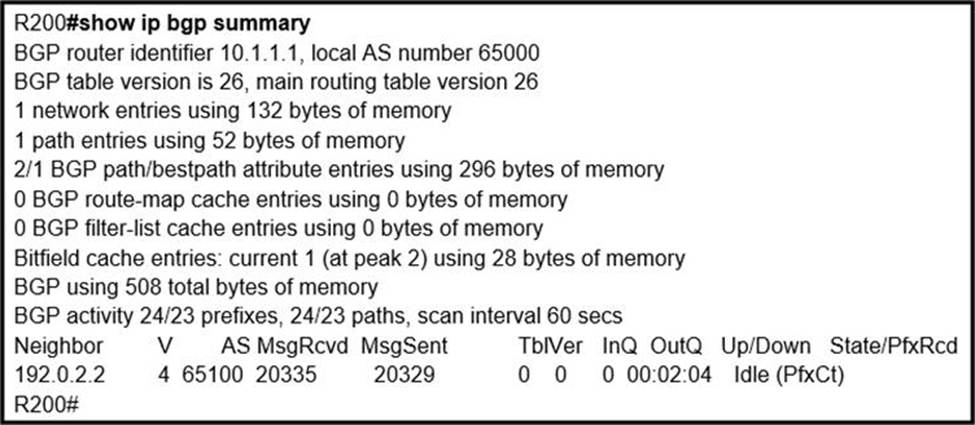
In which circumstance does the BGP neighbor remain in the idle condition?
- A . if prefixes are not received from the BGP peer
- B . if prefixes reach the maximum limit
- C . if a prefix list is applied on the inbound direction
- D . if prefixes exceed the maximum limit
D
Explanation:
https://www.cisco.com/c/en/us/support/docs/ip/border-gateway-protocol-bgp/25160-bgp-maximum-prefix.html#b
An engineer configured Reverse Path Forwarding on an interface and noticed that the routes are dropped when a route lookup fails on that interface for a prefix that is available in the routing table.
Which interface configuration resolves the issue?
- A . ip verify unicast source reachable-via rx
- B . ip verify unicast source reachable-via any
- C . ip verify unicast source reachable-via allow-default
- D . ip verify unicast source reachable-via 12-src
B
Explanation:
According to this question, uRPF is running in strict mode because packets are dropped even when that route exists in the routing table. Maybe packets are dropped because the receiving interface is different from the interface the local router uses to send packets to that destination. The ip verify unicast source reachable-via rx command enables Unicast RPF in strict mode.
To enable loose mode, administrators can use the any option (ip verify unicast source reachable-via any). In loose mode, it doesn’t matter if we use this interface to reach the source or not.
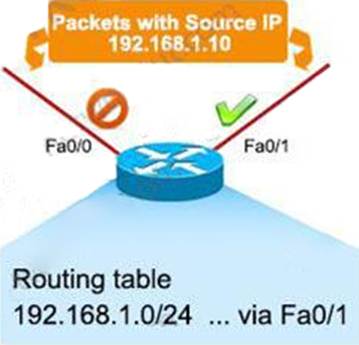
The allow-default option allows the use of the default route in the source verification process.