
Practice Free 300-410 Exam Online Questions
How is a preshared key "Test’’ for all the remote VPN rooters configured In a DMVPN using GRE over IPsec set up?
- A . authentication pre-share Test address 0.0.0.0 0.0.0.0
- B . set pre-share Test address 0.0.0.0 0.0.0.0
- C . crypto Ipsec key Test address 0.0.0.0 0.0.0.0
- D . crypto isakmp key Test address 0.0.0.0 0.0.0.0
Refer to the exhibit.
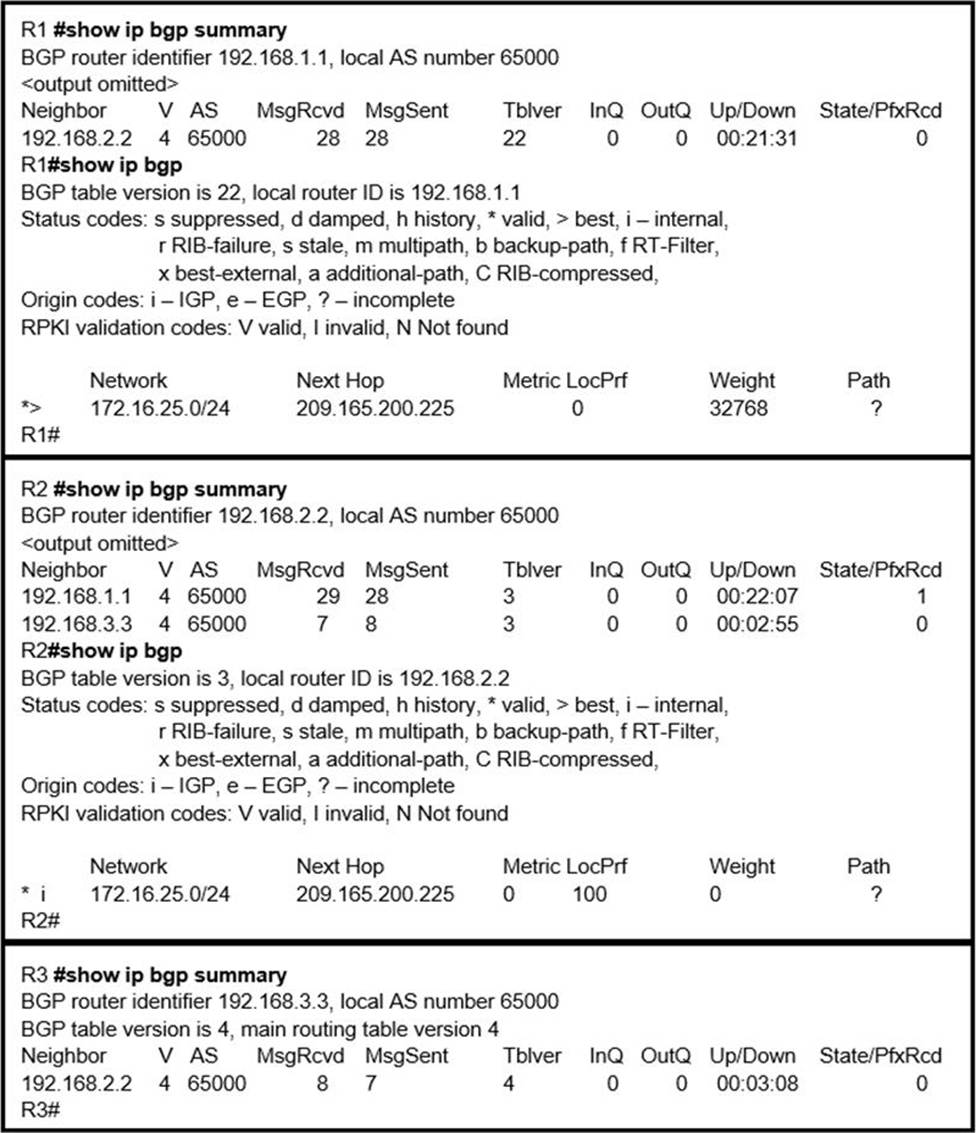
R2 is a route reflector, and R1 and R3 are route reflector clients. The route reflector learns the route to 172.16.25.0/24 from R1, but it does not advertise to R3.
What is the reason the route is not advertised?
- A . R2 does not have a route to the next hop, so R2 does not advertise the prefix to other clients.
- B . Route reflector setup requires full IBGP mesh between the routers.
- C . In route reflector setup, only classful prefixes are advertised to other clients.
- D . In route reflector setups, prefixes are not advertised from one client to another.
Refer to the exhibit.
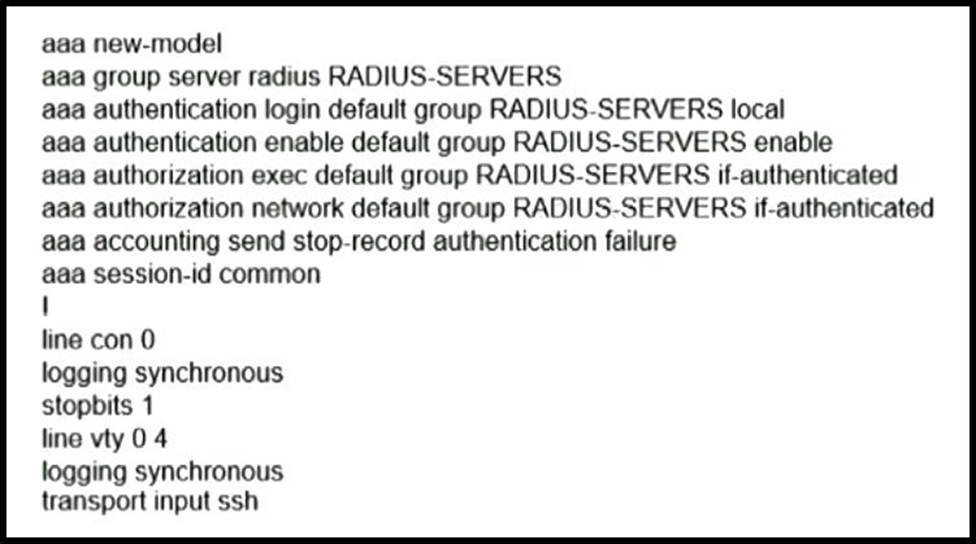
A network administrator successfully logs in to a switch using SSH from a (RADIUS server When the network administrator uses a console port to access the switch the RADIUS server returns shell: priv-lvl=15’’ and the switch asks to enter the enable command the command is entered, it gets rejected.
Which command set is used to troubleshoot and reserve this issue?
- A . line con 0aaa authorization consoleauthorization exec!line vty 0 4transport input ssh
- B . line con 0aaa authorization console!line vty 0 4authorization exec
- C . line con 0aaa authorization console priv15!line vty 0 4authorization exec
- D . line con 0aaa authorization consoleauthorization priv15!line vty 0 4transport input ssh
Exhibit:
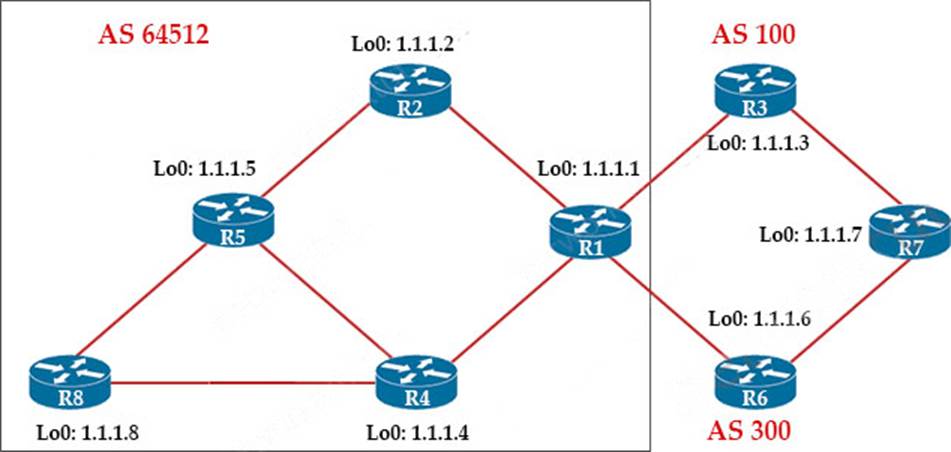
An engineer configured R2 and R5 as route reflectors and noticed that not all routes are sent to R1 to advertise to the eBGP peers.
Which iBGP routers must be configured as route reflectors to advertise all routes to restore reachability across all networks?
- A . R1 and R4
- B . R1 and R5
- C . R4 and R5
- D . R2 and R5
C
Explanation:
When R2 & R5 are route reflectors (RRs), routes from R4 & R8 are advertised to R5 and R5 advertises to R2. But R2 would drop them as R2 is also a RR. Therefore some routes are missing on R1 to advertise to eBGP peers.
Good reference:
https://www.ciscolive.com/c/dam/r/ciscolive/emea/docs/2015/pdf/TECRST-2310.pdf
Route reflectors (RR) must be fully iBGP meshed so we cannot configure RR on both R1 and R5.
We should choose routers at the center of the topology RRs, in this case R4 & R5.
Users were moved from the local DHCP server to the remote corporate DHCP server. After the move, none of the users were able to use the network.
Which two issues will prevent this setup from working properly? (Choose two)
- A . Auto-QoS is blocking DHCP traffic.
- B . The DHCP server IP address configuration is missing locally
- C . 802.1X is blocking DHCP traffic
- D . The broadcast domain is too large for proper DHCP propagation
- E . The route to the new DHCP server is missing
DRAG DROP
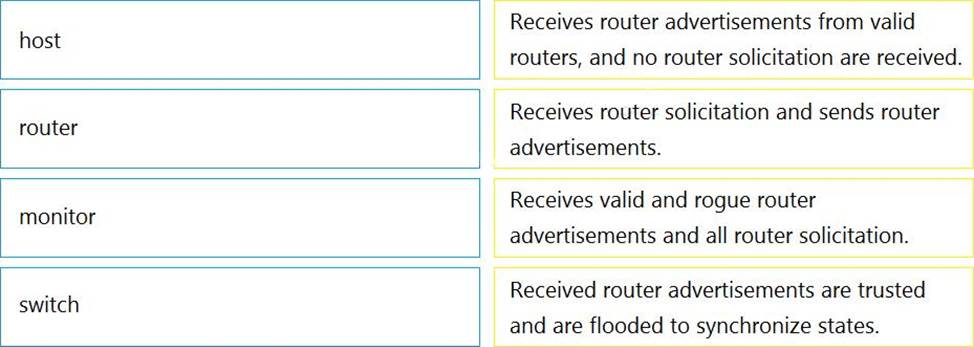
Drag and drop the IPv6 first hop security device roles from the left onto the corresponding descriptions on the right.
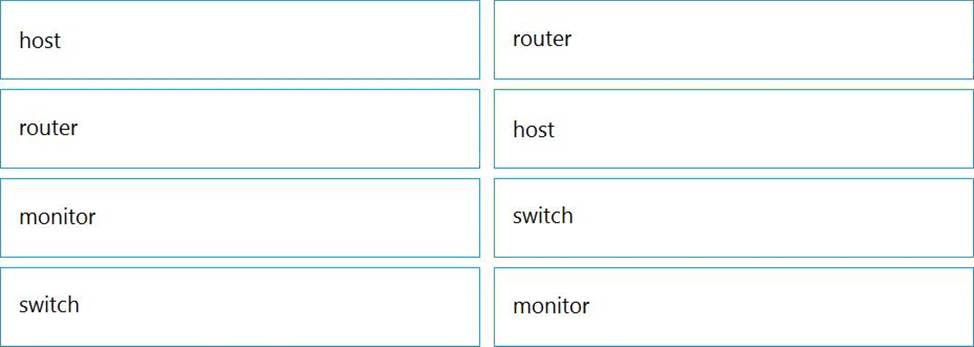
Explanation:
Graphical user interface, text, application, email Description automatically generated
Reference: https://www.cisco.com/c/en/us/td/docs/switches/datacenter/nexus9000/sw/7-x/security/configuration/guide/b_Cisco_Nexus_9000_Series_NX-OS_Security_Configuration_Guide_7x/b_Cisco_Nexus_9000_Series_NX-OS_Security_Configuration_Guide_7x_chapter_011011.pdf
Refer to the exhibit.
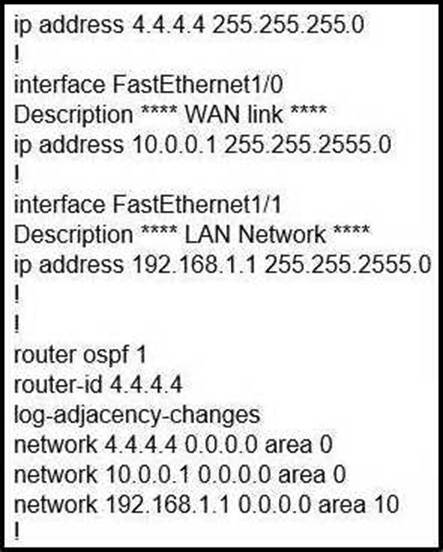
A)
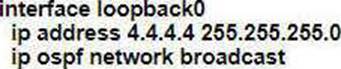
B)
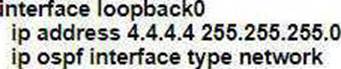
C)
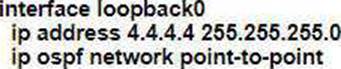
D)
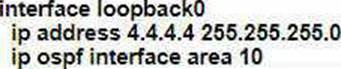
- A . Option
- B . Option
- C . Option
- D . Option
Refer to the exhibit.

An engineer must advertise routes into IPv6 MP-BGP and failed.
Which configuration resolves the issue on R1?
- A . router bgp 65000
no bgp default ipv4-unicast
address-family ipv6 multicast
network 2001:DB8::/64 - B . router bgp 65000
no bgp default ipv4-unicast
address-family ipv6 unicast
network 2001:DB8::/64 - C . router bgp 64900
no bgp default ipv4-unicast
address-family ipv6 unicast
network 2001:DB8::/64 - D . router bgp 64900
no bgp default ipv4-unicast
address-family ipv6 multicast
neighbor 2001:DB8:7000::2 translate-update ipv6 multicast
Refer to the exhibit.
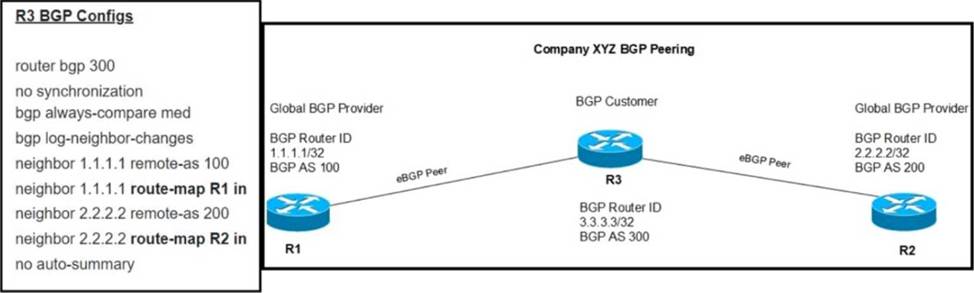
R3 is dual-homed to two service providers for traffic redundancy. R3 prefers its outbound traffic via R2.
Which set of configurations achieves this goal?
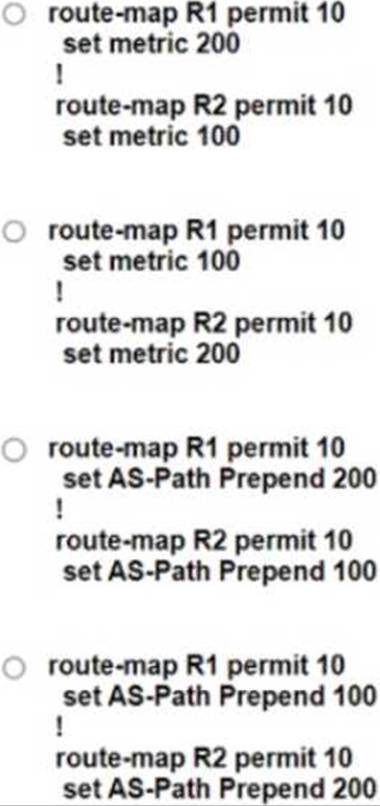
- A . Option A
- B . Option B
- C . Option C
- D . Option D
Refer to the exhibit.
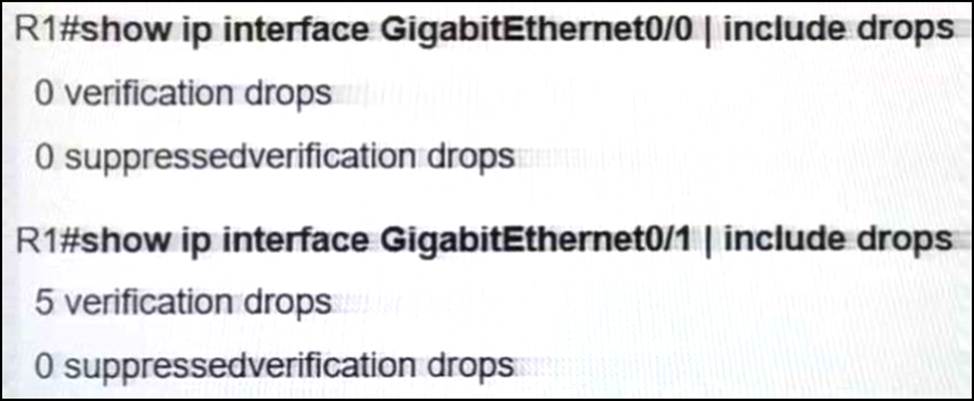
R1 is configured with uRPF, and ping to R1 is failing from a source present in the R1 routing table via the GigatxtEthernet 0/0 interface.
Which action resolves the issue?
- A . Remove the access list from the interface GigabrtEthernet 0/0
- B . Modify the uRPF mode from strict to loose
- C . Enable Cisco Express Forwarding to ensure that uRPF is functioning correctly
- D . Add a floating static route to the source on R1 to the GigabitEthernet 0/1 interface