Practice Free DP-700 Exam Online Questions
HOTSPOT
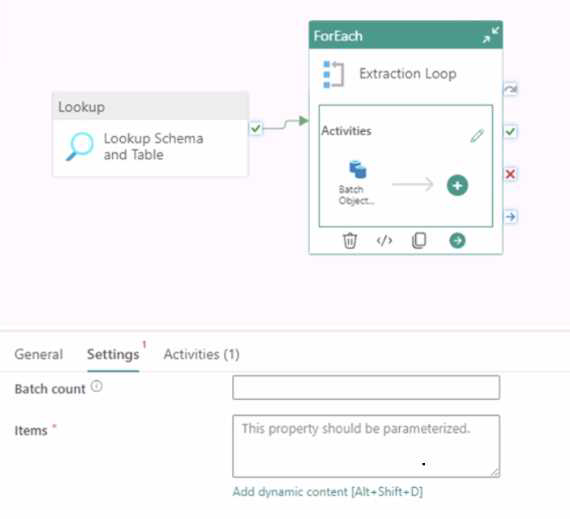
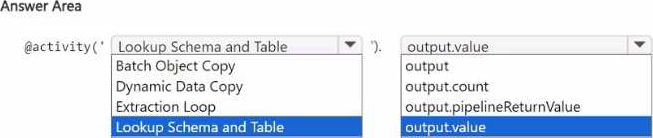
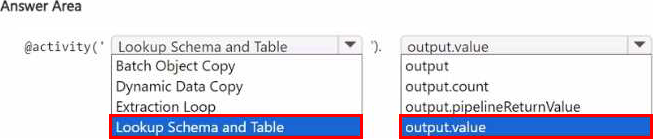
You need to ensure that the data engineers are notified if any step in populating the lakehouses fails.
The solution must meet the technical requirements and minimize development effort.
What should you use? To answer, select the appropriate options in the answer area. NOTE: Each correct selection is worth one point.
You have a Fabric workspace that contains a warehouse named Warehouse1.
You have an on-premises Microsoft SQL Server database named Database1 that is accessed by using an on-premises data gateway.
You need to copy data from Database1 to Warehouse1.
Which item should you use?
- A . a Dataflow Gen1 dataflow
- B . a data pipeline
- C . a KQL queryset
- D . a notebook
B
Explanation:
To copy data from an on-premises Microsoft SQL Server database (Database1) to a warehouse (Warehouse1) in Microsoft Fabric, the best option is to use a data pipeline. A data pipeline in Fabric allows for the orchestration of data movement, from source to destination, using connectors, transformations, and scheduled workflows. Since the data is being transferred from an on-premises database and requires the use of a data gateway, a data pipeline provides the appropriate framework to facilitate this data movement efficiently and reliably.
HOTSPOT
You need to troubleshoot the ad-hoc query issue.
How should you complete the statement? To answer, select the appropriate options in the answer area. NOTE: Each correct selection is worth one point.
Explanation:
A screenshot of a computer Description automatically generated
SELECT last_run_start_time, last_run_command: These fields will help identify the execution details of the long-running queries.
FROM queryinsights.long_running_queries: The correct solution is to check the long-running queries using the queryinsights.long_running_queries view, which provides insights into queries that take longer than expected to execute.
WHERE last_run_total_elapsed_time_ms > 7200000: This condition filters queries that took more than 2 hours to complete (7200000 milliseconds), which is relevant to the issue described.
AND number_of_failed_runs > 1: This condition is key for identifying queries that have failed more than once, helping to isolate the problematic queries that cause failures and need attention.
HOTSPOT
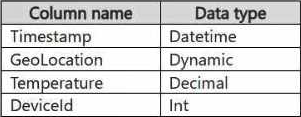
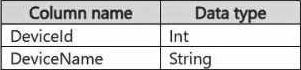
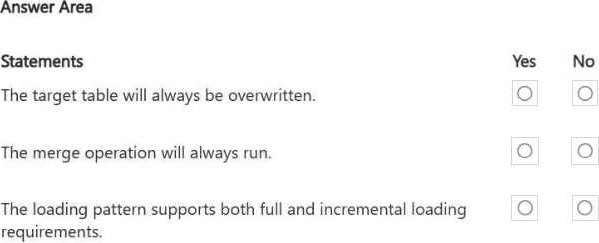
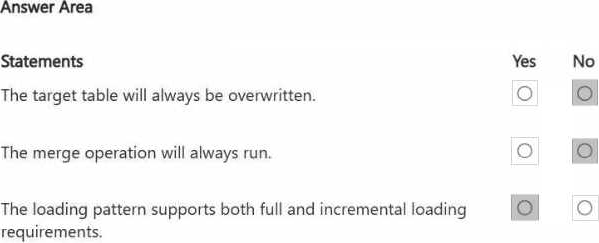
You have a Fabric workspace that contains a warehouse named Warehouse1. Warehouse1 contains the following tables and columns.

You need to denormalize the tables and include the ContractType and StartDate columns in the Employee table.
The solution must meet the following requirements:
– Ensure that the StartDate column is of the date data type.
– Ensure that all the rows from the Employee table are preserved and include any matching rows from the Contract table.
– Ensure that the result set displays the total number of employees per contract type for all the contract types that have more than two employees.
How should you complete the statement? To answer, select the appropriate options in the answer area. NOTE: Each correct selection is worth one point.

You have a Fabric workspace that contains a warehouse named Warehouse1. Data is loaded daily into Warehouse1 by using data pipelines and stored procedures.
You discover that the daily data load takes longer than expected.
You need to monitor Warehouse1 to identify the names of users that are actively running queries.
Which view should you use?
- A . sys.dm_exec_connections
- B . sys.dm_exec_requests
- C . queryinsights.long_running_queries
- D . queryinsights.frequently_run_queries
- E . sys.dm_exec_sessions
You have a Fabric warehouse named DW1 that loads data by using a data pipeline named Pipeline1. Pipeline1 uses a Copy data activity with a dynamic SQL source. Pipeline1 is scheduled to run every 15 minutes.
You discover that Pipeline1 keeps failing.
You need to identify which SQL query was executed when the pipeline failed.
What should you do?
- A . From Monitoring hub, select the latest failed run of Pipeline1, and then view the output JSON.
- B . From Monitoring hub, select the latest failed run of Pipeline1, and then view the input JSON.
- C . From Real-time hub, select Fabric events, and then review the details of Microsoft.Fabric.ItemReadFailed.
- D . From Real-time hub, select Fabric events, and then review the details of Microsoft. Fabric.ItemUpdateFailed.
B
Explanation:
The input JSON contains the configuration details and parameters passed to the Copy data activity during execution, including the dynamically generated SQL query.
Viewing the input JSON for the failed pipeline run provides direct insight into what query was executed at the time of failure.
Topic 2, Litware, Inc
Case Study
Overview
This is a case study. Case studies are not timed separately. You can use as much exam time as you would like to complete each case. However, there may be additional case studies and sections on this exam. You must manage your time to ensure that you are able to complete all questions included on this exam in the time provided.
To answer the questions included in a case study, you will need to reference information that is provided in the case study. Case studies might contain exhibits and other resources that provide more information about the scenario that is described in the case study. Each question is independent of the other questions in this case study.
At the end of this case study, a review screen will appear. This screen allows you to review your answers and to make changes before you move to the next section of the exam. After you begin a new section, you cannot return to this section.
To start the case study
To display the first question in this case study, click the Next button. Use the buttons in the left pane to explore the content of the case study before you answer the questions. Clicking these buttons displays information such as business requirements, existing environment, and problem statements. If the case study has an All Information tab, note that the information displayed is identical to the information displayed on the subsequent tabs. When you are ready to answer a question, click the Question button to return to the question.
Overview
Litware, Inc. is a publishing company that has an online bookstore and several retail bookstores worldwide. Litware also manages an online advertising business for the authors it represents.
Existing Environment. Fabric Environment
Litware has a Fabric workspace named Workspace1. High concurrency is enabled for Workspace1.
The company has a data engineering team that uses Python for data processing.
Existing Environment. Data Processing
The retail bookstores send sales data at the end of each business day, while the online bookstore constantly provides logs and sales data to a central enterprise resource planning (ERP) system.
Litware implements a medallion architecture by using the following three layers: bronze, silver, and gold. The sales data is ingested from the ERP system as Parquet files that land in the Files folder in a lakehouse. Notebooks are used to transform the files in a Delta table for the bronze and silver layers. The gold layer is in a warehouse that has V-Order disabled.
Litware has image files of book covers in Azure Blob Storage. The files are loaded into the Files folder.
Existing Environment. Sales Data
Month-end sales data is processed on the first calendar day of each month. Data that is older than one month never changes.
In the source system, the sales data refreshes every six hours starting at midnight each day.
The sales data is captured in a Dataflow Gen1 dataflow. When the dataflow runs, new and historical data is captured.
The dataflow captures the following fields of the source:
– Sales Date
– Author
– Price
– Units
– SKU
A table named AuthorSales stores the sales data that relates to each author. The table contains a column named AuthorEmail. Authors authenticate to a guest Fabric tenant by using their email address.
Existing Environment. Security Groups
Litware has the following security groups:
– Sales
– Fabric Admins
– Streaming Admins
Existing Environment. Performance Issues
Business users perform ad-hoc queries against the warehouse. The business users indicate that reports against the warehouse sometimes run for two hours and fail to load as expected. Upon further investigation, the data engineering team receives the following error message when the reports fail to load: “The SQL query failed while running.”
The data engineering team wants to debug the issue and find queries that cause more than one failure.
When the authors have new book releases, there is often an increase in sales activity. This increase slows the data ingestion process.
The company’s sales team reports that during the last month, the sales data has NOT been up-to-date when they arrive at work in the morning.
Requirements. Planned Changes
Litware recently signed a contract to receive book reviews. The provider of the reviews exposes the data in Amazon Simple Storage Service (Amazon S3) buckets.
Litware plans to manage Search Engine Optimization (SEO) for the authors. The SEO data will be streamed from a REST API.
Requirements. Version Control
Litware plans to implement a version control solution in Fabric that will use GitHub integration and follow the principle of least privilege.
Requirements. Governance Requirements
To control data platform costs, the data platform must use only Fabric services and items. Additional Azure resources must NOT be provisioned.
Requirements. Data Requirements
Litware identifies the following data requirements:
– Process the SEO data in near-real-time (NRT).
– Make the book reviews available in the lakehouse without making a copy of the data.
– When a new book cover image arrives in the Files folder, process the image as soon as possible.
You need to implement the solution for the book reviews.
Which should you do?
- A . Create a Dataflow Gen2 dataflow.
- B . Create a shortcut.
- C . Enable external data sharing.
- D . Create a data pipeline.
B
Explanation:
The requirement specifies that Litware plans to make the book reviews available in the lakehouse without making a copy of the data. In this case, creating a shortcut in Fabric is the most appropriate solution. A shortcut is a reference to the external data, and it allows Litware to access the book reviews stored in Amazon S3 without duplicating the data into the lakehouse.
Note: This question is part of a series of questions that present the same scenario. Each question in the series contains a unique solution that might meet the stated goals. Some question sets might have more than one correct solution, while others might not have a correct solution.
After you answer a question in this section, you will NOT be able to return to it. As a result, these questions will not appear in the review screen.
You have a Fabric eventstream that loads data into a table named Bike_Location in a KQL database.
The table contains the following columns:
– BikepointID
– Street
– Neighbourhood
– No_Bikes
– No_Empty_Docks
– Timestamp
You need to apply transformation and filter logic to prepare the data for consumption. The solution must return data for a neighbourhood named Sands End when No_Bikes is at least 15. The results must be ordered by No_Bikes in ascending order.
Solution: You use the following code segment:

Does this meet the goal?
- A . Yes
- B . no
B
Explanation:
Filter Condition: It correctly filters rows where Neighbourhood is "Sands End" and No_Bikes is greater than or equal to 15.
Sorting: The sorting is explicitly done by No_Bikes in ascending order using sort by No_Bikes asc.
Projection: It projects the required columns (BikepointID, Street, Neighbourhood, No_Bikes, No_Empty_Docks, Timestamp), which minimizes the data returned for consumption.
You need to recommend a solution to resolve the MAR1 connectivity issues. The solution must minimize development effort.
What should you recommend?
- A . Add a ForEach activity to the data pipeline.
- B . Configure retries for the Copy data activity.
- C . Configure Fault tolerance for the Copy data activity.
- D . Call a notebook from the data pipeline.
HOTSPOT
You have a Fabric warehouse named DW1 that contains four staging tables named ProductCategory, ProductSubcategory, Product, and SalesOrder. ProductCategory, ProductSubcategory, and Product are used often in analytical queries.
You need to implement a star schema for DW1. The solution must minimize development effort.
Which design approach should you use? To answer, select the appropriate options in the answer area. NOTE: Each correct selection is worth one point.