
Practice Free AZ-500 Exam Online Questions
HOTSPOT
You have an Azure subscription that contains the resources shown in the following table.

You create a shared access token as shown in the following exhibit.
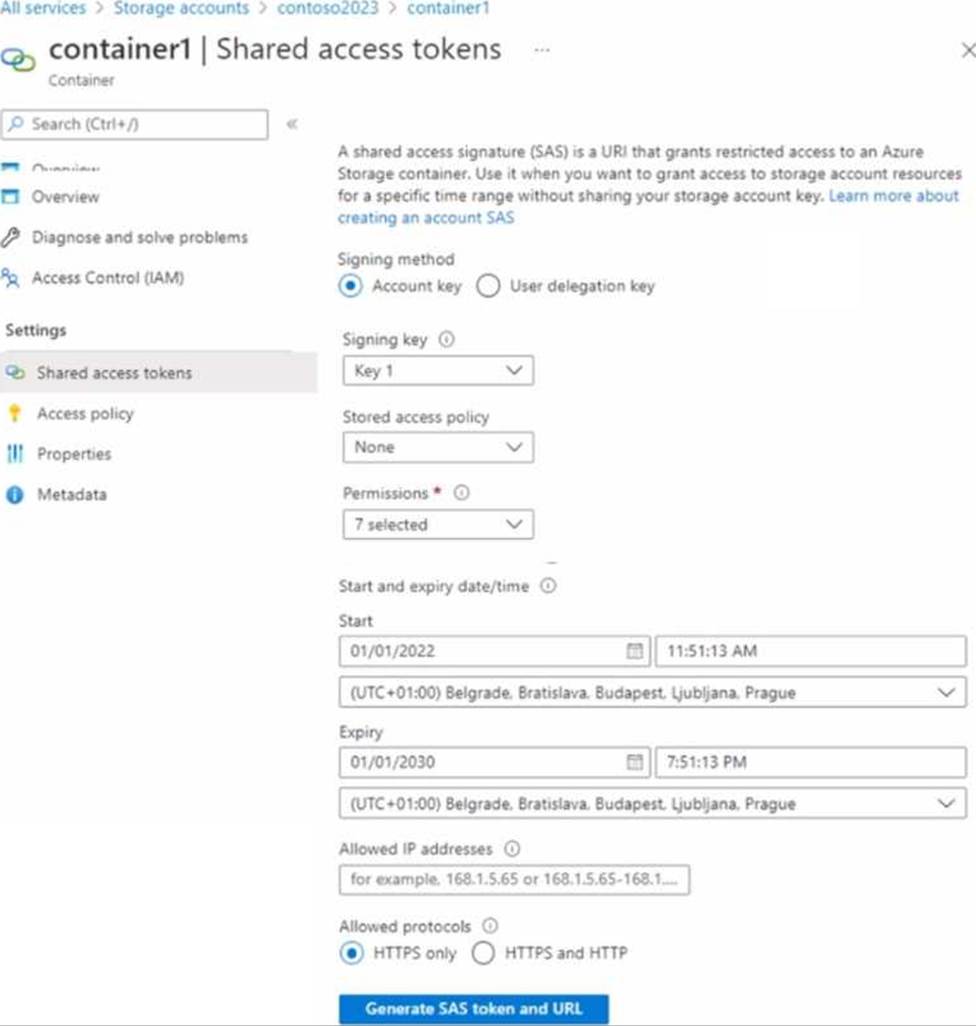
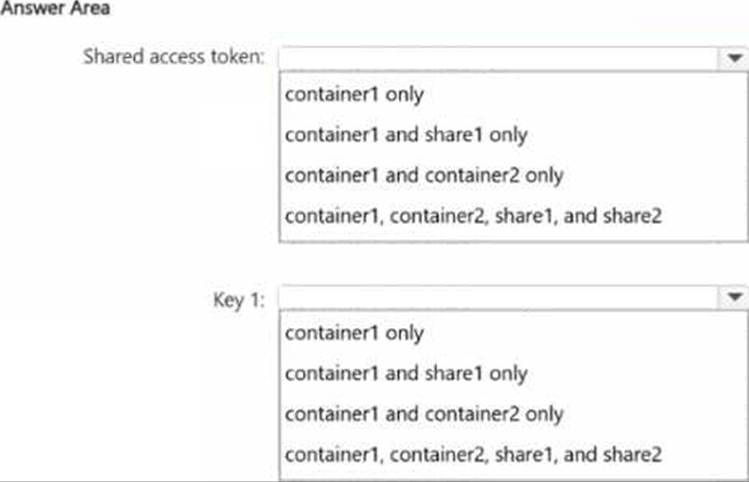
Which resources can you access by using the shared access token and Key 1? To answer, select the appropriate options in the answer area. NOTE: Each correct answer is worth one point.

HOTSPOT
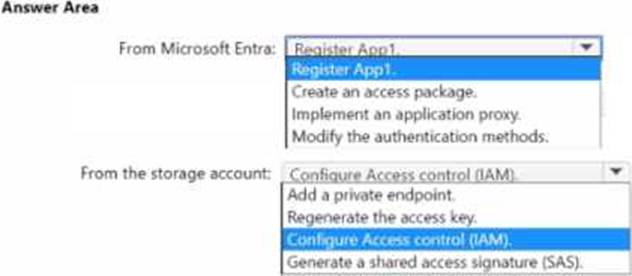
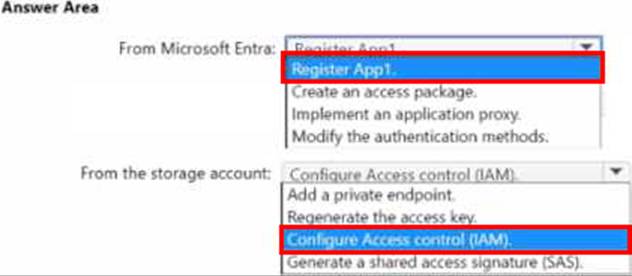
You have an Azure Storage account that contains a blob container named container! and a client application named App1. You need to enable App1 access to container1 by using Microsoft Entra authentication.
What should you do? lo answer, select the appropriate options in the answer area. NOTE: Each correct selection is worth one point.
HOTSPOT
You have the Azure key vaults shown in the following table.
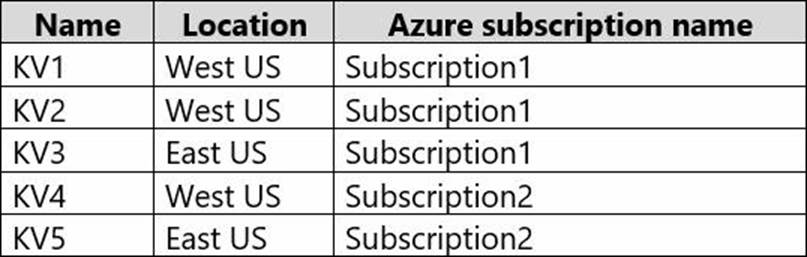
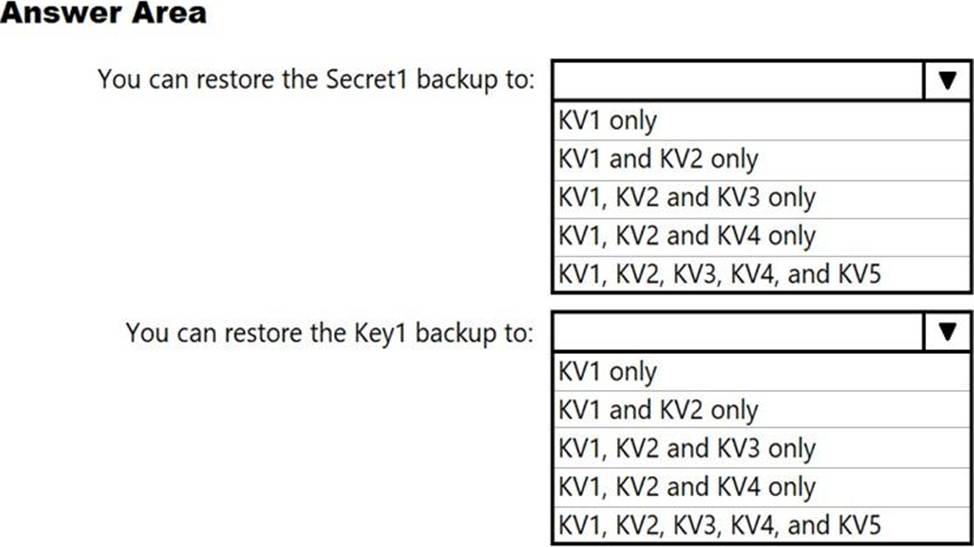
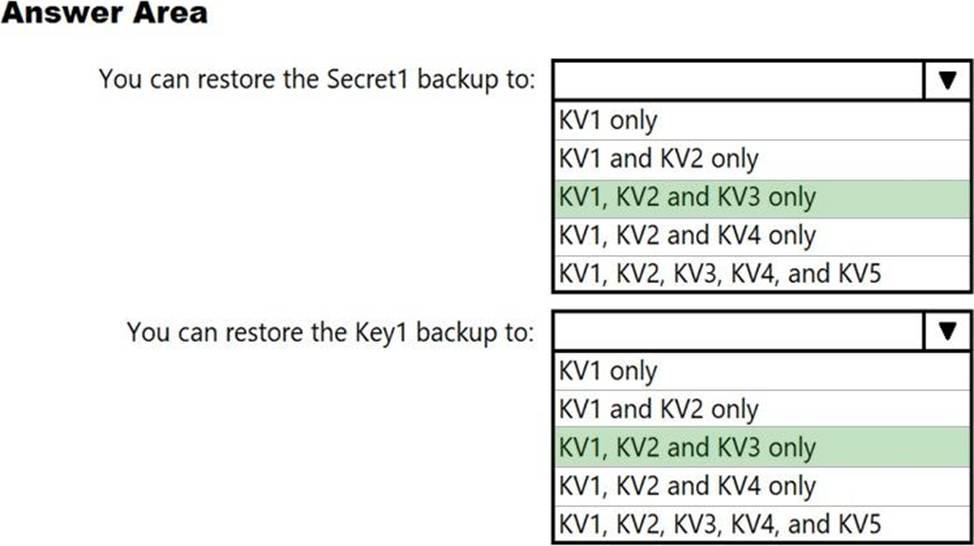
KV1 stores a secret named Secret1 and a key for a managed storage account named Key1.
You back up Secret1 and Key1.
To which key vaults can you restore each backup? To answer, select the appropriate options in the answer area. NOTE: Each correct selection is worth one point.
You have an Azure subscription that contains 100 virtual machines and has Azure Security Cent,-. Standard tier enabled.
You plan to perform a vulnerability scan of each virtual machine.
You need to deploy the vulnerability scanner extension to the virtual machines by using an Azure Resource Manager template.
Which two values should you specify in the code to automate the deployment of the extension to the virtual machines? Each correct answer presents part of the solution. NOTE: Each correct selection is worth one point.
- A . the user assigned managed identity
- B . the Key Vault managed storage account Key
- C . the Azure Active Directory (Azure AD) ID
- D . the system-assigned managed identity
- E . the primary shared key
- F . the workspace ID
You are configuring and securing a network environment.
You deploy an Azure virtual machine named VM1 that is configured to analyze network traffic.
You need to ensure that all network traffic is routed through VM1.
What should you configure?
- A . a system route
- B . a network security group (NSG)
- C . a user-defined route
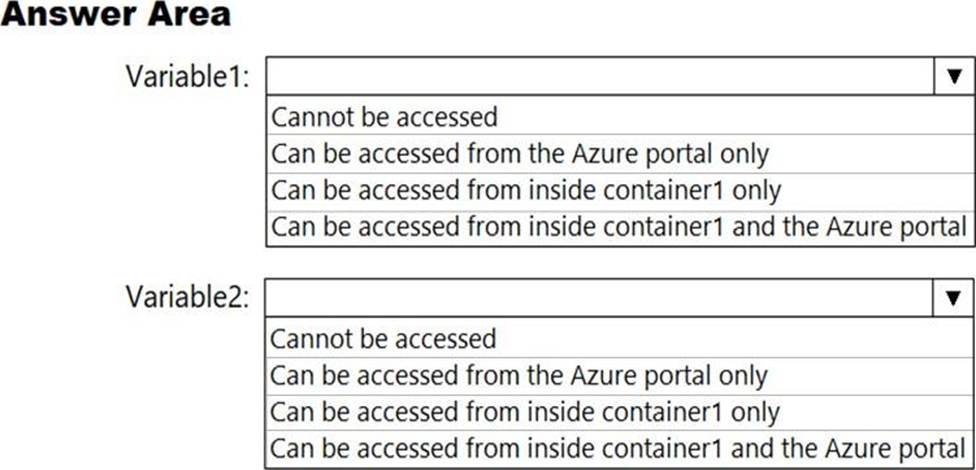
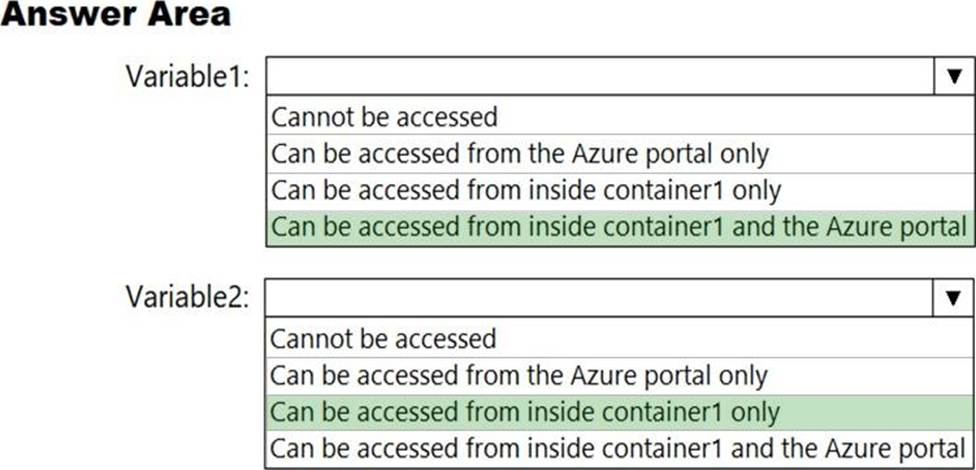
HOTSPOT
You have a file named File1.yaml that contains the following contents.
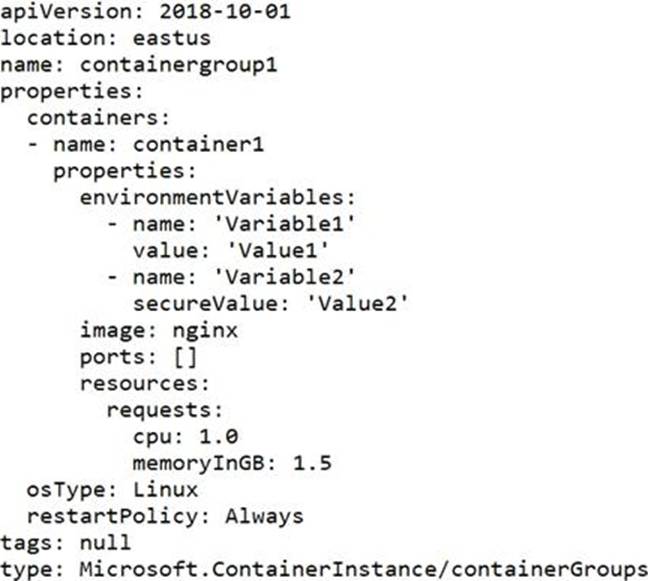
You create an Azure container instance named container1 by using File1.yaml.
You need to identify where you can access the values of Variable1 and Variable2.
What should you identify? To answer, select the appropriate options in the answer area. NOTE: Each correct selection is worth one point.
HOTSPOT
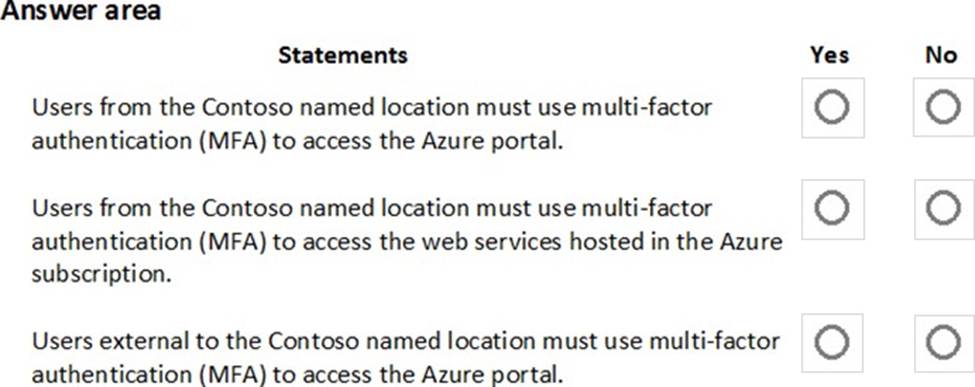
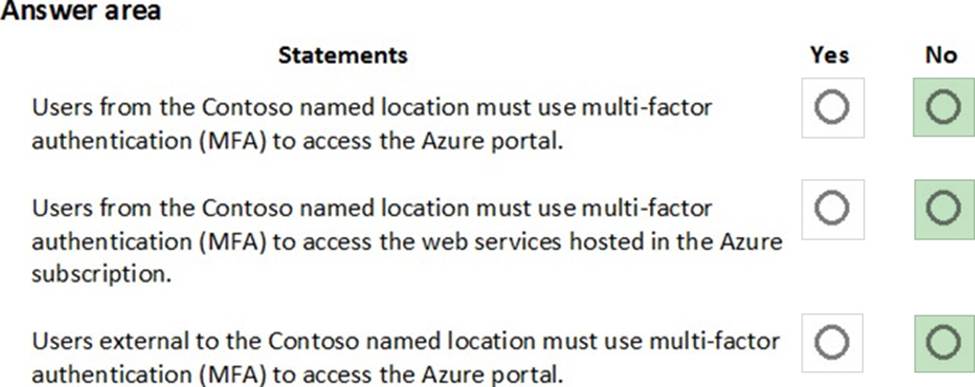
You create a new Azure subscription that is associated to a new Azure Active Directory (Azure AD) tenant.
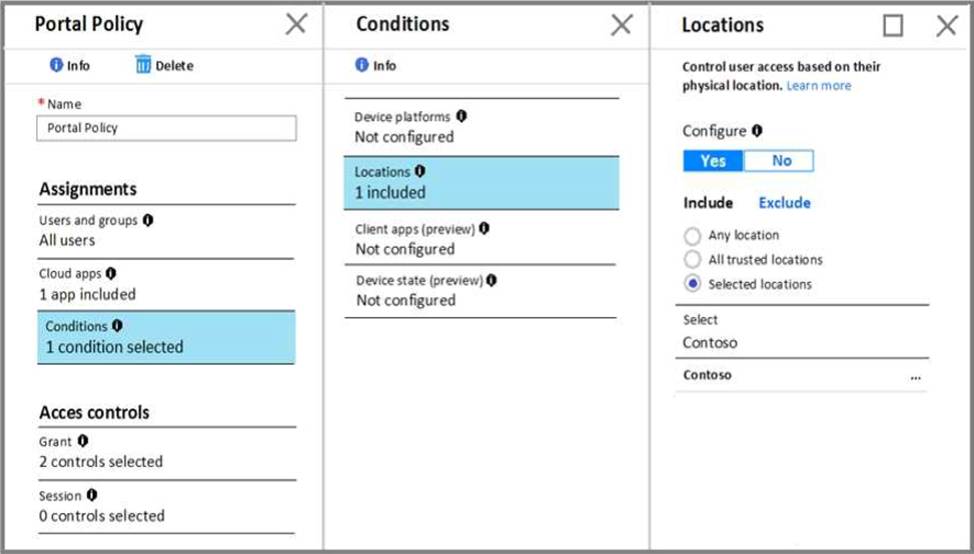
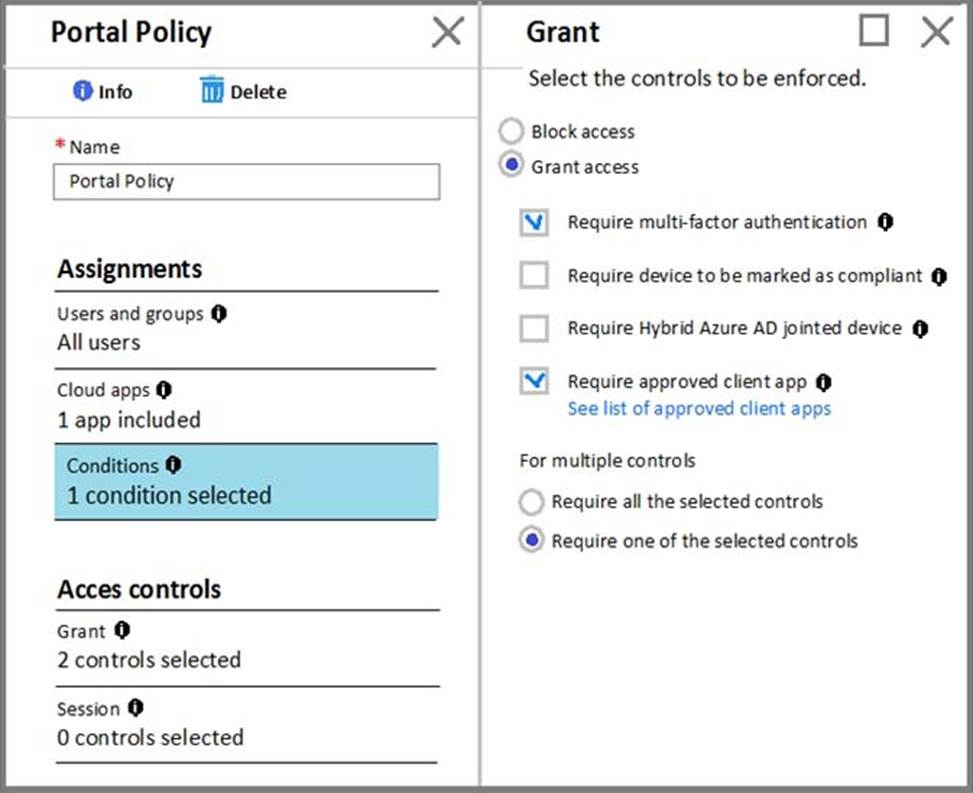
You create one active conditional access policy named Portal Policy. Portal Policy is used to provide access to the Microsoft Azure Management cloud app.
The Conditions settings for Portal Policy are configured as shown in the Conditions exhibit. (Click the Conditions tab.)
The Grant settings for Portal Policy are configured as shown in the Grant exhibit. (Click the Grant tab.)
For each of the following statements, select Yes if the statement is true. Otherwise, select No. NOTE: Each correct selection is worth one point.
You need to implement the planned change for WAF1.
The solution must minimize administrative effort
What should you do?
- A . Create an Azure policy.
- B . Modify the Azure-managed DRS.
- C . Add a custom rule.
- D . Modify the Bot Manager 1.1 rule set.
You have an Azure AD turned that contains a user named User1.
You purchase an App named App1.
User1 needs to publish App1 by using Azure AD Application Proxy.
Which role should you assign to User1?
- A . Hybrid identity Administrator
- B . Cloud App Security Administrator
- C . Application Administrator
- D . Cloud Application Administrate
You have a Microsoft Entra tenant that contains a user named User1.
You plan to enable passwordless authentication for the tenant.
You need to ensure that User1 can enable the combined registration experience. The solution must use the principle of least privilege.
Which role should you assign to User1?
- A . Security Administrator
- B . Global Administrator
- C . Privileged Role Administrator
- D . Authentication Administrator