
Practice Free D-AV-DY-23 Exam Online Questions
What happens when a new storage node is deployed in the event of a storage node failure?
- A . A spare storage node must be deployed manually
- B . A spare storage node will be deployed automatically
- C . The utility node is automatically promoted to a storage node
- D . The utility node needs to be deployed manually
A company with a multi-node Dell Avamar Data Store has experienced a catastrophic disk failure due to a RAID controller error on a storage node.
Which fault tolerance feature provides protection against data corruption on that node?
- A . RAID
- B . RAIN
- C . HFS Check
- D . Checkpoints
B
Explanation:
I am sure answer is NOT A
As assessment I was selecting A which is not valid in the results
Avamar ensures protection from disk and data corruption through the use of RAID (redundant array of independent disks). The type of RAID depends on the particular node type.
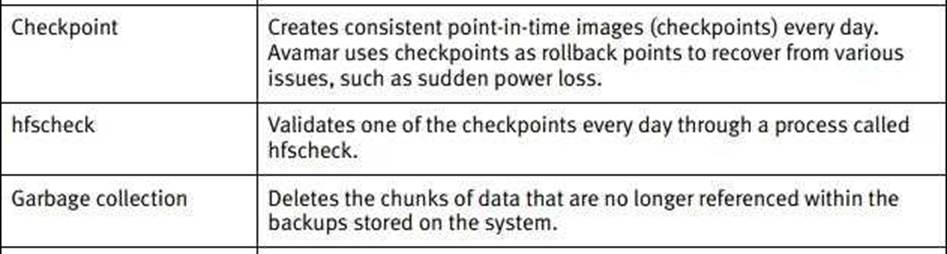
The phases of hfscheck mentioned above run in the following sequence:
1- indexsweep
2- datasweep
3- paritysweep
4- refcheck
During the indexsweep phase, the system confirms the integrity of the index (the index is the "table of contents" for all the data on the system) and also caches the index entries for each data chunk onto the same disk where the chunk itself is stored. This is done to improve the performance of later phases of the hfscheck. The datasweep phase is typically the longest phase of hfscheck. This phase reads each data chunk from the system and compares the hash of that chunk with the hash that is recorded in the index. This confirms that each data chunk is the same as it was when it was backed up.
As I’m sure you know, multi-node Avamar systems are protected by RAIN parity. During the paritysweep phase, the parity information is recalculated and checked against the parity information on disk.
The refcheck phase of hfscheck checks the referential integrity of the backups by verifying that every chunk of data that is referenced by a backup can be found in the index.
https://community.Dell.com/thread/180789
A file server-only environment is backing up data to a 1.0 TB Dell Avamar Virtual Edition server.
On average, how much new backup data may be added per day to remain in a steady capacity state?
- A . 2GB
- B . 4GB
- C . 6GB
- D . 8GB
B
Explanation:

What happens when an Dell Avamar advanced retention policy is used for backups?
- A . Retention rules are applied to backups based on the backup completion time
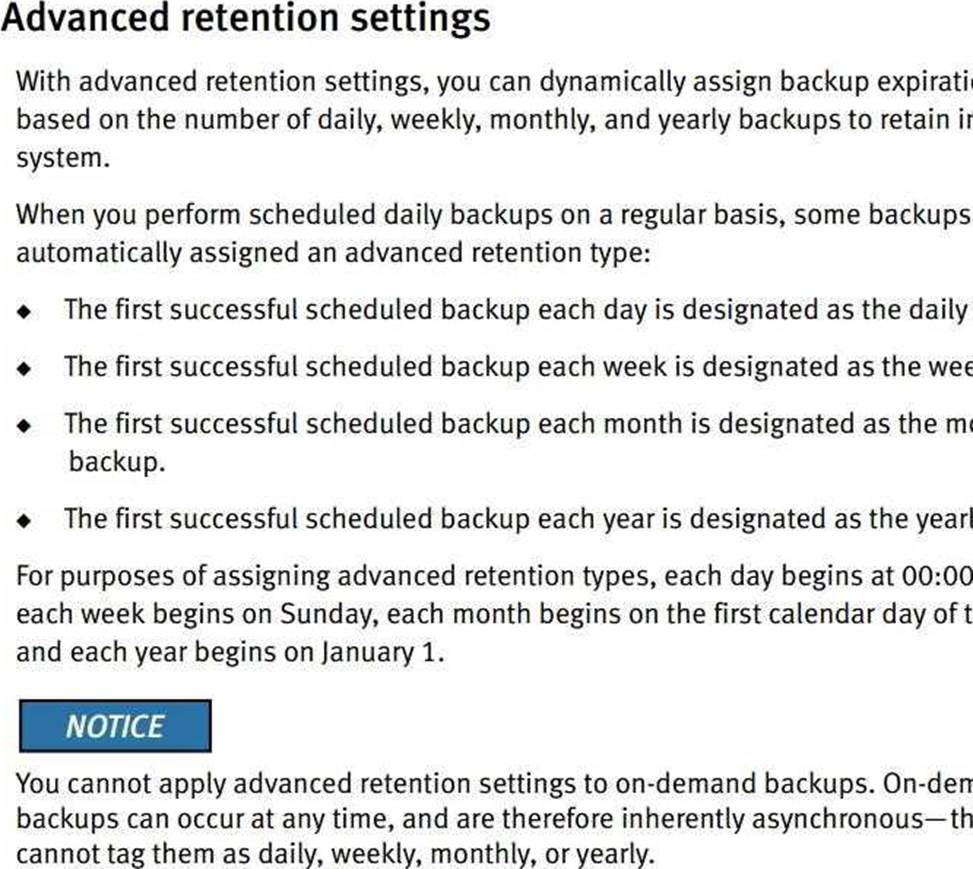
- B . Retentions are dynamically assigned to scheduled backups based on when the backups occur
- C . The daily retention value is automatically assigned to on-demand backups
- D . An upper retention limit is dynamically applied to all backups
B
Explanation:
In an Avamar configuration, what can be backed up to an Dell Data Domain device?
- A . Microsoft Exchange VSS and Oracle
- B . NDMP and Microsoft Exchange
- C . Informix and Oracle
- D . Microsoft SQL Server and File System Data
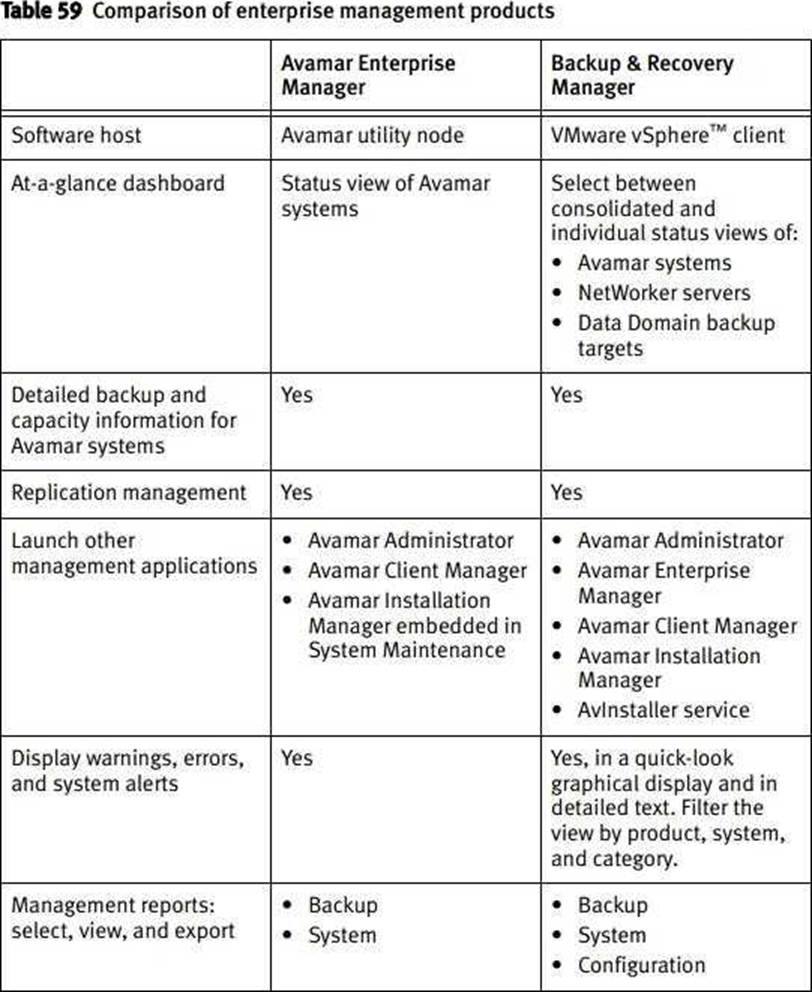
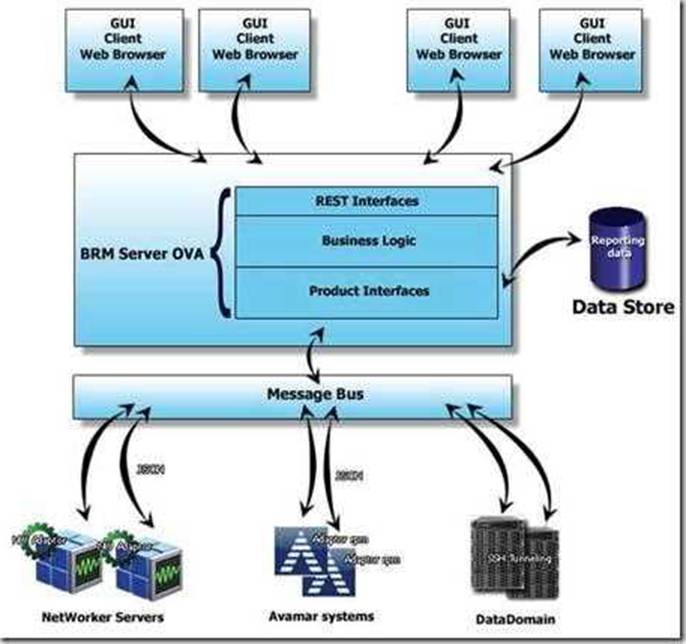
An Dell customer is using Dell NetWorker and Data Domain in their backup environment. They now
want to install an Dell Avamar server and monitor all products from a single console.
Which software would you recommend?
- A . Replication Manager
- B . Backup and Recovery Manager
- C . Enterprise Manager
- D . Data Protection Advisor
B
Explanation:
Which type of VMware backup methods does Dell Avamar version 5.x and above support for ESX Server 4.0 and later versions?
- A . Guest and VMware Image Proxy
- B . Guest, VCB, and VMware Image Proxy
- C . Guest and VCB
- D . VCB and VMware Image Proxy
When sizing a large file server on an Dell Avamar, how many bytes per file are added to the file cache?
- A . 20
- B . 24
- C . 40
- D . 44
D
Explanation:
The most important thing to do on a client with so many files is to make sure that the file cache is sized appropriately. The file cache is responsible for the vast majority (>90%) of the performance of the Avamar client. If there’s a file cache miss, the client has to go and thrash your disk for a while chunking up a file that may already be on the server.
So how to tune the file cache size?
The file cache starts at 22MB in size and doubles in size each time it grows. Each file on a client will use 44 bytes of space in the file cache (two SHA-1 hashes consuming 20 bytes each and 4 bytes of metadata). For 25 million files, the client will generate just over 1GB of cache data.
http://jslabonte.blogspot.com/2013/08/avamar-and-large-dataset-with-multiples.html
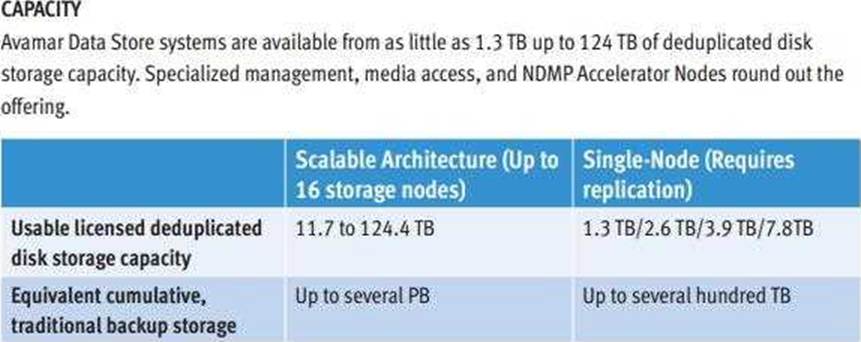
What is the maximum number and types of nodes for an Dell Avamar multi-node server?
- A . 7 storage, 1 utility, and 1 spare
- B . 15 storage, 1 utility, 1 accelerator, and 1 spare
- C . 16 storage, 1 utility, and 1 spare
- D . 18 storage, 1 utility, and 1 spare
C
Explanation:
When accessing the utility node using a bash shell (putty) session as `admin’, you receive a message referencing a possible Man-In-The-Middle attack stating:
"REMOTE HOST IDENTIFICATION HAS CHANGED!"
How do you repair this condition?
- A . Remove the IP address in question from /home/admin/.ssh/known_hosts
- B . Remove the IP address in question from /root/.ssh/known_hosts
- C . Remove "admin" from /etc/passwd on the utility node
- D . Remove "admin_key" key from /home/admin/.ssh