
Practice Free ACD101 Exam Online Questions
Which statement regarding the use of rule inputs for expression rules is true?
- A . Only basic data types should be used for rule inputs. Custom Data Types (CDTs) or records should always be queried within the expression rule rather than passed in via rule input.
- B . The data type for rule inputs should be set only for Custom Data Types (CDTs).
- C . If the value passed in via rule input may be a list of numbers, the rule input must be configured as an “Array”.
Which two scenarios are ideal for using Appian Portals? (Choose two.)
- A . A manager wants to obtain a view of their team’s performance.
- B . A retail customer wants to conduct a public survey for their recently launched product.
- C . An employee who does not have an account wants to register for their company’s vehicle fleet a management system.
- D . A user needs to submit support requests when they are using their mobile device in areas with bad network coverage.
Review the following expression rule:
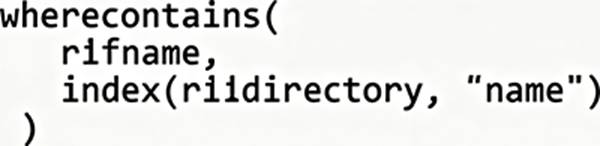
ri!name is defined as "Maria".
ri!directory is defined as the following:
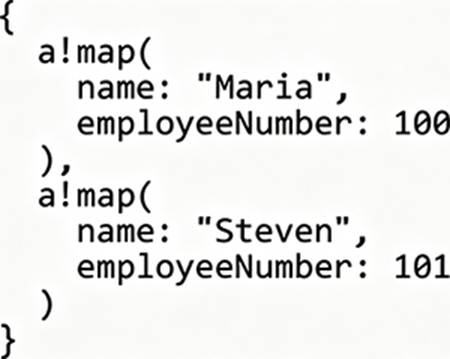
What is the expected output?
- A . Maria
- B . 0
- C . 1
What is the Production environment used for?
- A . Allowing business users to test the application.
- B . Allowing developers to make updates to the application.
- C . Allowing business users to use the final version of the application.
You are configuring an employee onboarding User Input Task that will be assigned to the human resources group.
Based on the default behavior for task assignments, which statement is valid?
- A . Multiple users can accept the task at the same time up until the point that the first user completes it.
- B . For each user in the group, a task is generated and assigned to them to complete.
- C . One user in the group can accept the task for themselves and complete it.
You are using a local variable in an expression rule to describe the height of an applicant.
Which statement correctly describes the application of Appian best practices for naming your local variable?
- A . local!hoaa – This employs the naming convention of abbreviating "Height of an applicant" to minimize both the typing required by developers and the length of code Appian is required to parse.
- B . local!applicantHeight – This employs the naming convention of specifically describing the value contained by the variable.
- C . local!x – This employs the naming convention of using algebraic variables for a value that may either change over time or be used by future developers for other purposes.
Review the following code snippet:
display value (1, {0, 1, 2}, {"Low", "Medium", "High"}, "Unknown")
The definition of display value is:
Tries to match a value in a given array with a value at the same index in a replacement array and returns either the value at the same index or a default value if the value is not found.
What does this code snippet return?
- A . Low
- B . Medium
- C . High
You are configuring a local variable on an interface to store the date and time that the username field was last modified.
The local variables are currently configured as follows:

Which a!refresh Variable configuration should be added so that local! Username Last Modified stores the correct timestamp?
- A . refreshInterval: 0
- B . refreshOnVarChange: local!username
- C . refreshAlways: true
What is an Appian best practice for calling a query on your interface?
- A . Call the query once on a local variable.
- B . Call the query everywhere you need it to show data.
- C . Call the query once on a rule input